Gensuke Daikon: an Iconic Part of Winter in Kanazawa, Known for Its Juiciness and Delicate White Peel
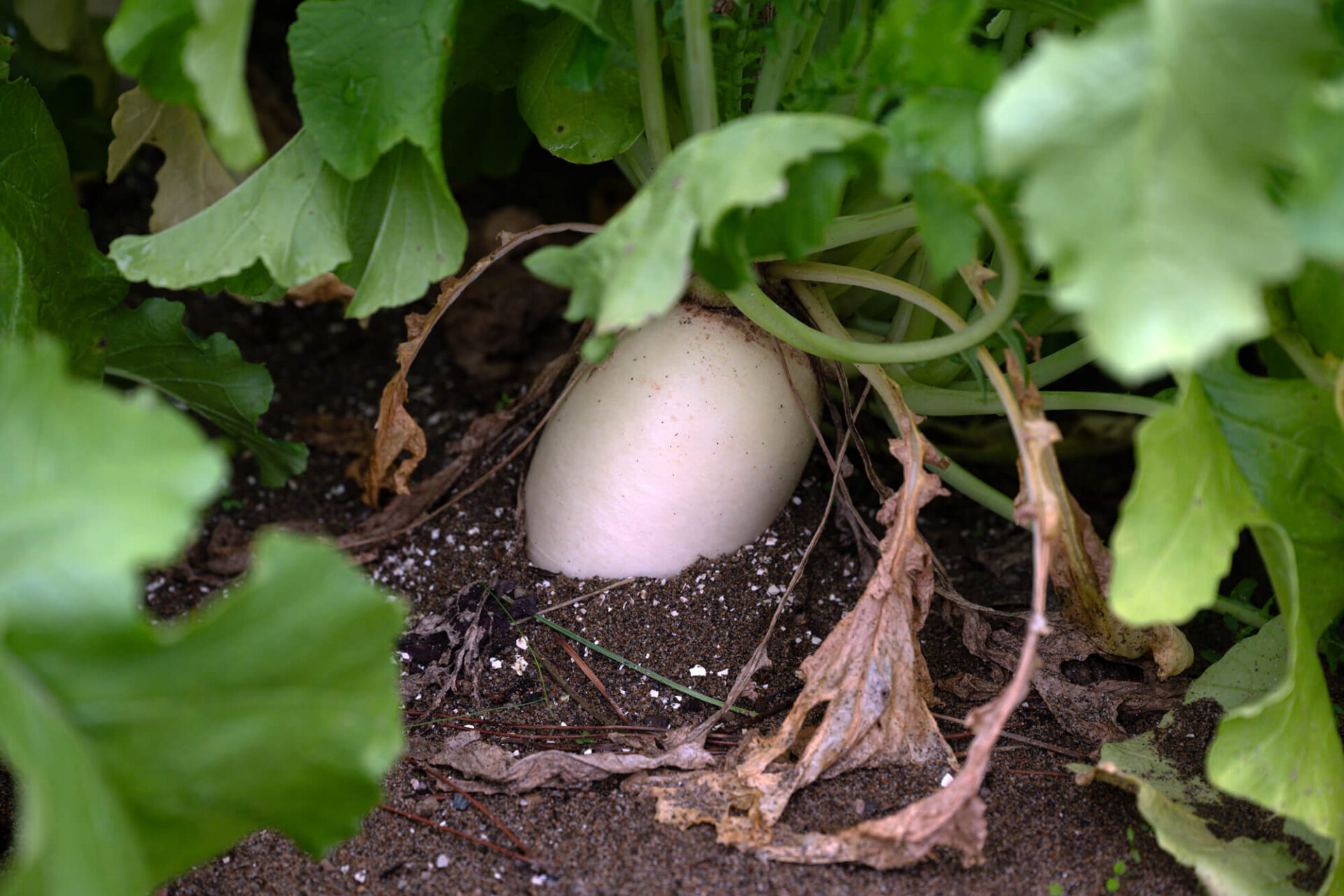
Pure White in Color, Delicate in Texture, and Charmingly Stout in Shape
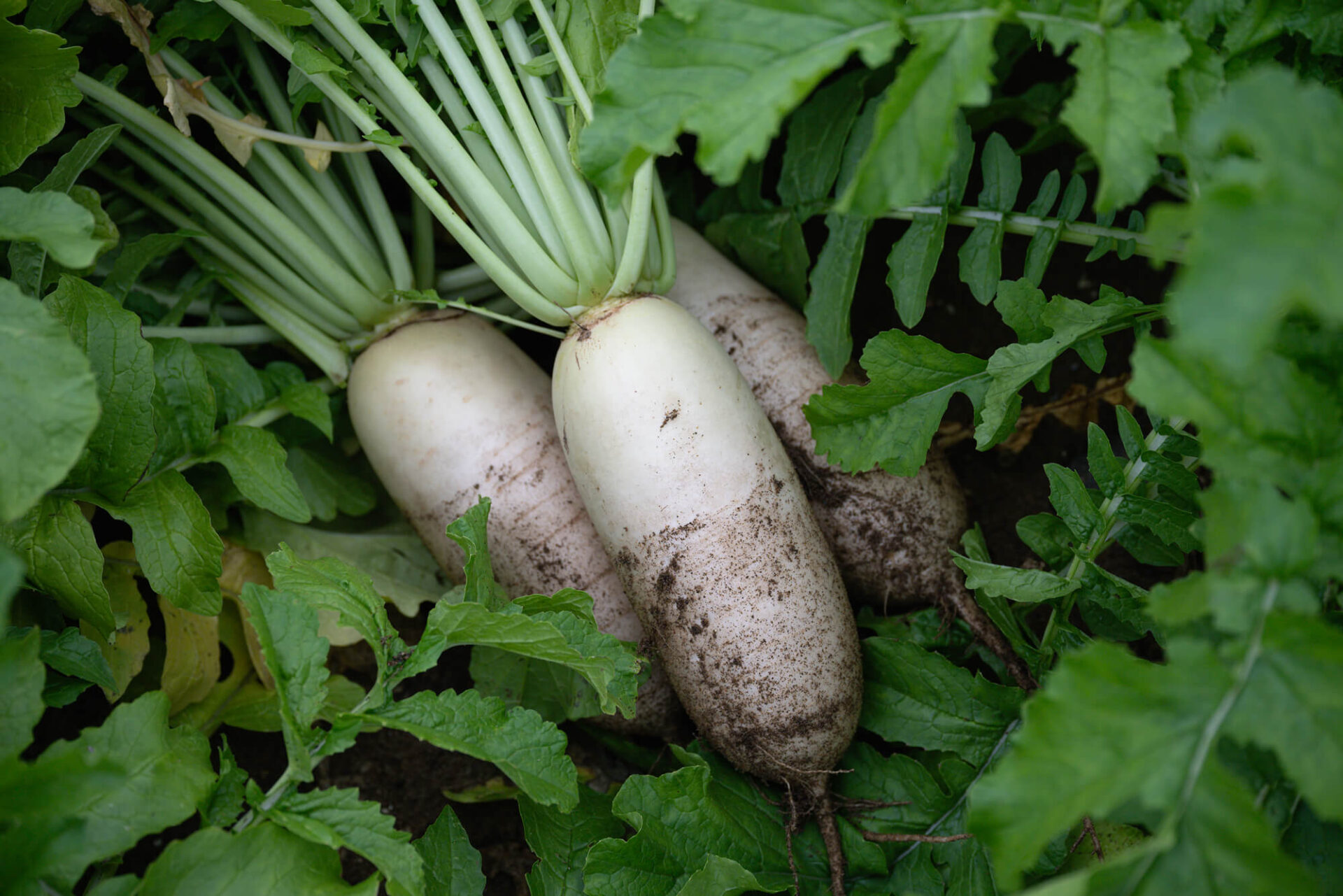
Gensuke daikon radishes are beautiful white, with a juicy, delicate inside, and have an endearingly thick, almost cylindrical shape to them. These daikon radishes have become an unmistakable local specialty of Ishikawa, with not only locals but even the selective Kansai-region market praising them as the most delicious daikon that money can buy. They shine particularly brightly in stewed dishes, such as Kanazawa-style oden or yellowtail-daikon stew, due to the way they can handle hours of stewing without falling apart. At the same time, though, they are perfectly suited to all sorts of other cooking as well: Japanese favorites like tender stewed daikon with miso sauce or daikon cut into thick strips and seasoned with vinegar, in western-inspired dishes like salads or daikon steak, or even in local Ishikawa dishes like daikon sushi. The only limit is your imagination.
These exquisite daikon radishes are a wintertime fixture of dinner tables in Kanazawa, but they were only made possible through many years of passionate trial-and-error work.
Offering a Taste of the Region’s Terroir: a Goal Passed Down for Generations
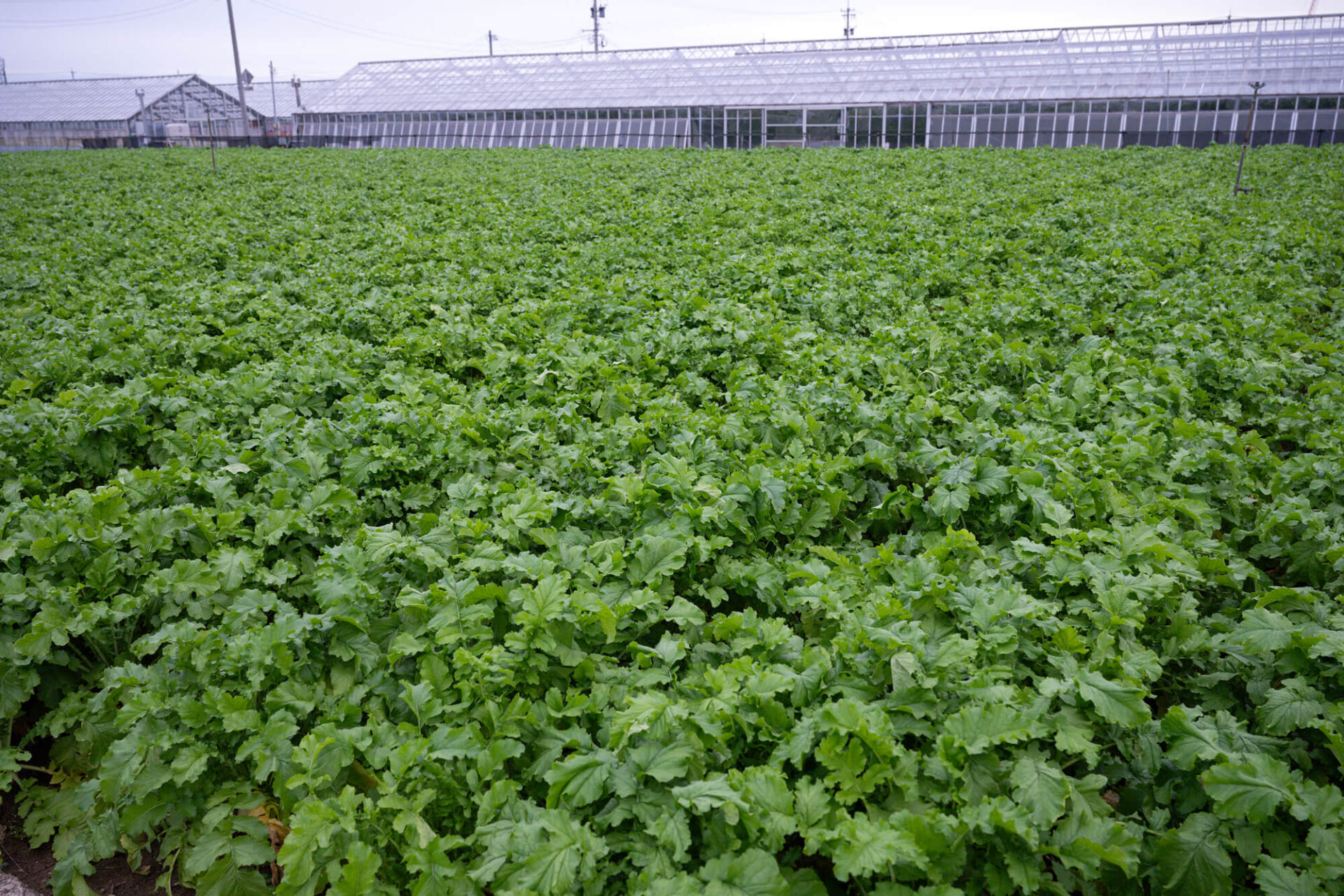
Gensuke daikon radishes are officially called Utsugi Gensuke daikon radishes, named for the Utsugi area of Kanazawa, where they were first developed. These vegetables take advantage of the sandy soil here, and have become iconic name-brand local produce from Ishikawa. The story of this particular variety of daikon begins in 1932, with the efforts of the farmer Saichiro Matsumoto.
Saichiro took a hardy, early-growing variety of Miyashige daikon radishes from Aichi, where they had been cultivated by the farmer Gensuke Inoue, and brought them to Utsugi, a sandy area by the Sea of Japan coast. Here, after they naturally cross-bred with Utsugi’s native Nerima variety of daikon radishes, Saichiro spent a decade carefully selecting from each year’s harvest, eventually resulting in the Gensuke daikon radishes we know today.
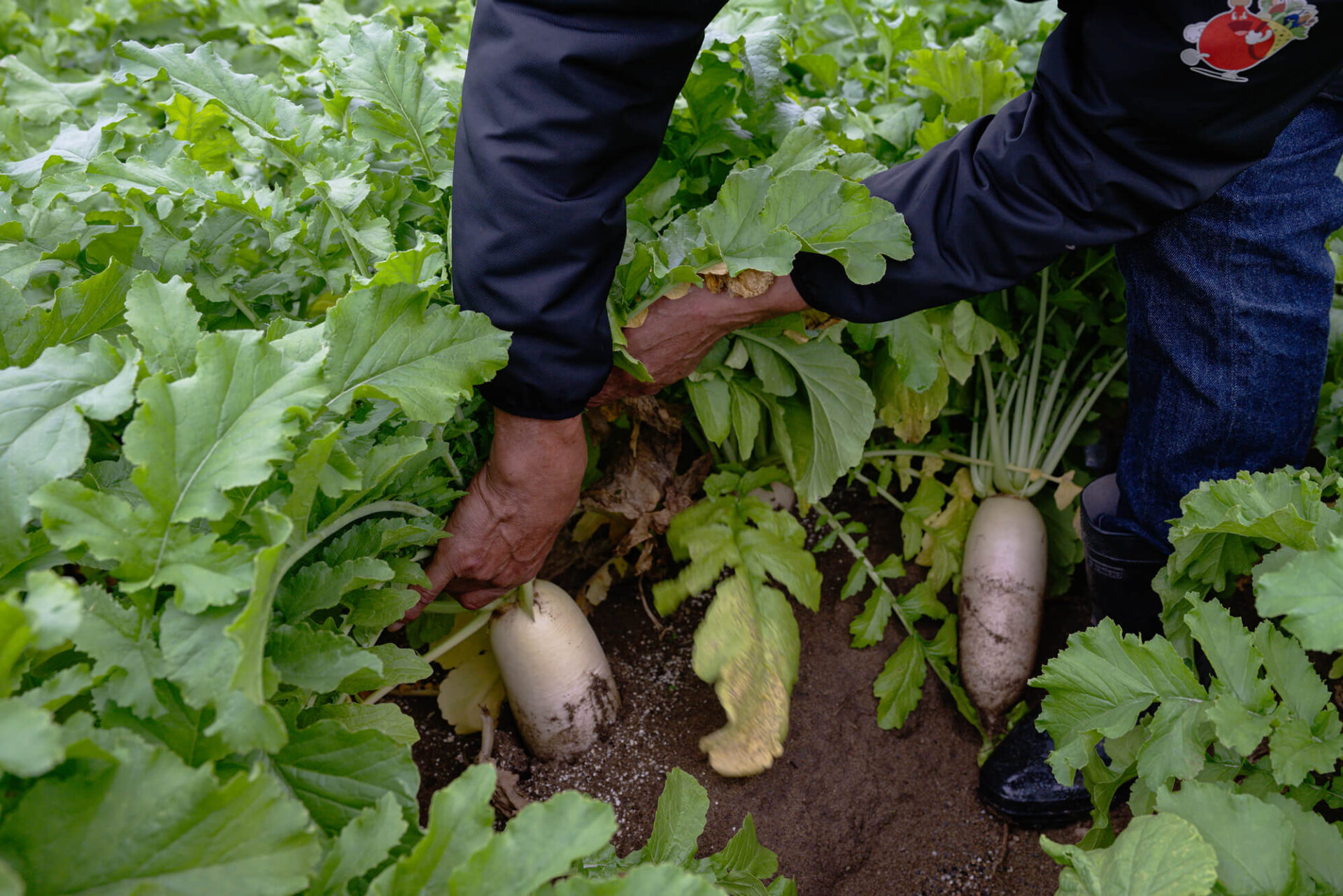
More and more farmers began growing Gensuke daikon radishes, taking advantage of their higher yields and lower susceptibility to disease compared to other common varieties. By 1960, these had become a major local industry in their own right, with annual harvests as large as 3,000 tons. They proved challenging to grow, though, and soon enough, though, their popularity with farmers began to wane, as did the number of farmers growing them. At one point, the only ones left growing Gensuke daikon radishes were the Matsumotos themselves, carrying on the family tradition.
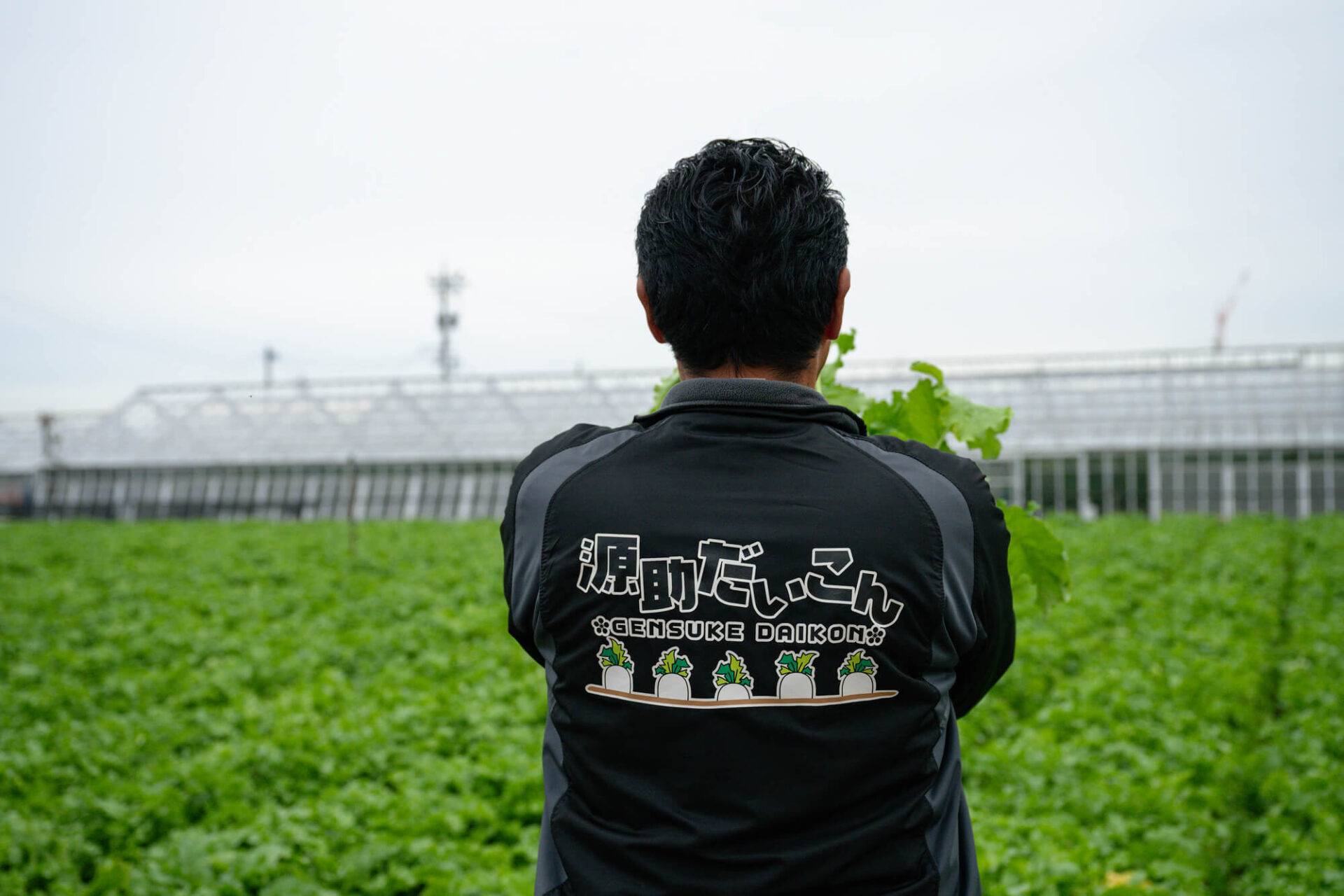
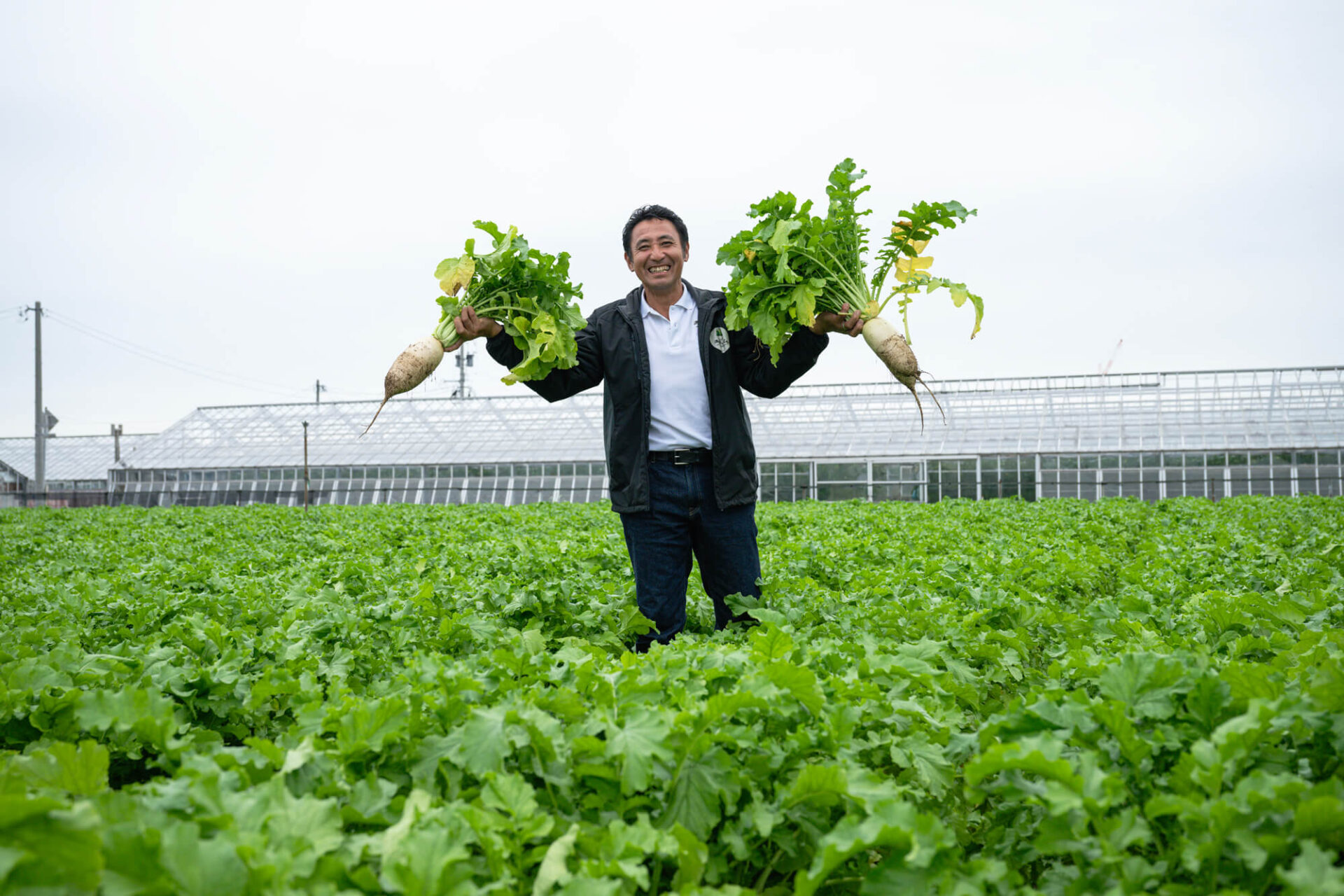
The Matsumotos have taken on the preservation of Gensuke daikon radish farming as a family tradition, if nothing else. As the grandson of the creator of this variety of daikon, Mitsuaki Matsumoto has followed in his father’s footsteps as head of the JA Kanazawa Utsugi Gensuke Daikon Association. Today, he is as hard at work as ever to carry on this tradition and begin a new chapter in this vegetable’s story. Things changed in 1997 with Gensuke daikon radishes being selected as one of Kaga Vegetables, a premium brand of local varieties unique to Ishikawa, leading more farmers to try growing them once again. Looking back, he says, “That was a major turning point.” A number of younger farmers have come to give Gensuke daikon another chance, each working to preserve the tradition while evolving it, through their own trial and error.
A Positive Attitude Is the Secret to Delicious Daikon
When it comes to growing Gensuke daikon radishes, farmers need both excellent technique and a focused commitment. It’s a constant battle: from the soil conditions to the formulations of fertilizers to day-to-day changes in the weather, every single thing affects the quality of the finished product. “The length, the thickness, the texture of the peel, the juiciness… everything needs to meet certain quality thresholds to be market-ready,” says Matsumoto. It’s clear from his words that he is very serious about maintaining standards for Gensuke daikon radishes throughout the production region.
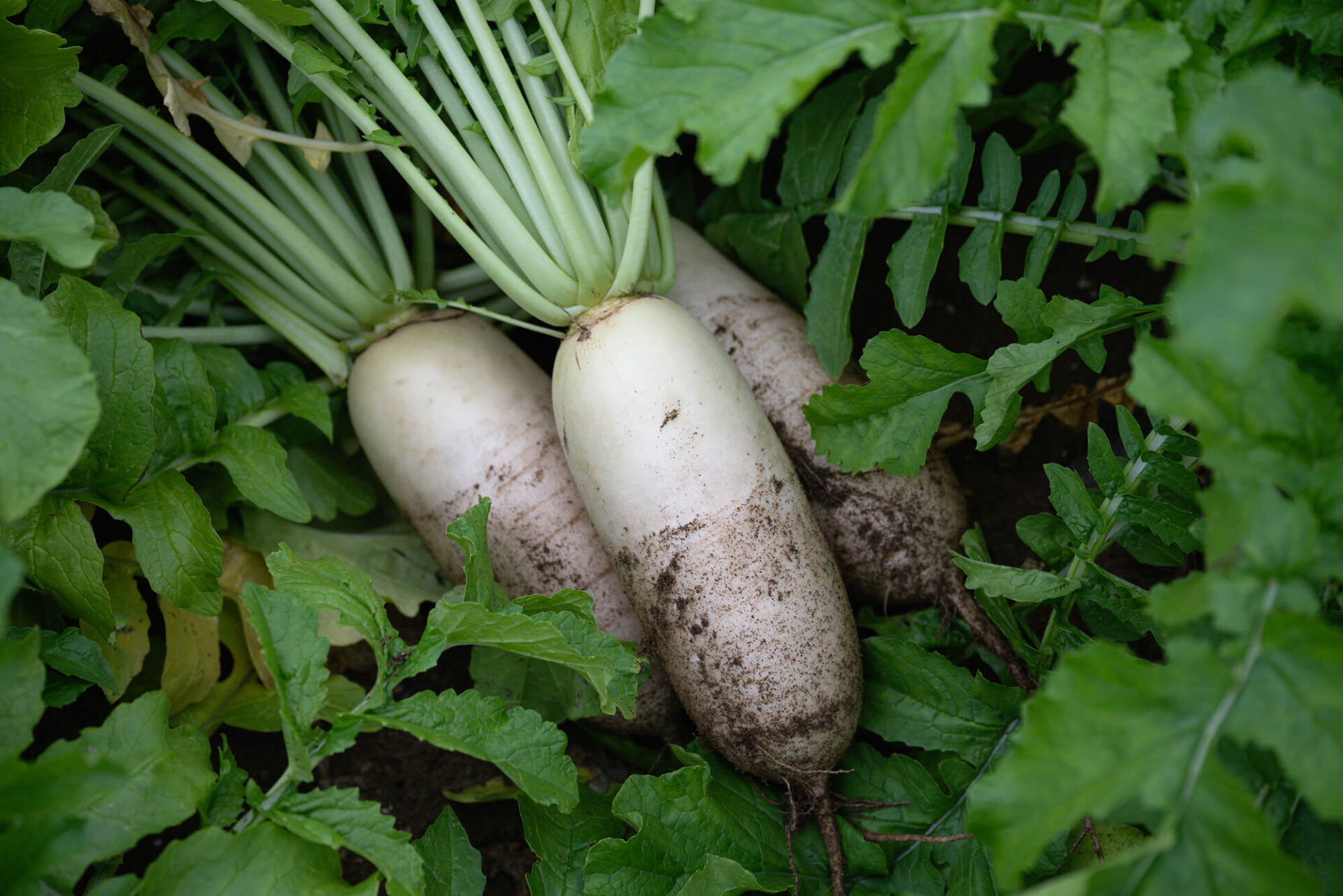
Gensuke daikon radishes are fairly delicate, and struggle to handle hot weather. Their seeds are ordinarily planted in late August, but with the extreme temperatures of recent summers, planting season has seen delays in some cases. Whether outside in open fields or in greenhouses, these daikon radishes are grown with great care, and are ready to be shipped out when they reach 8 cm in diameter and 22–25 cm in length. For ones grown in open fields, this is usually around late October to mid November, while greenhouse-grown ones tend to reach these sizes from mid November through late January. Production is systematically scheduled and assigned among the farmers to ensure a smooth transition between the two harvest seasons, and Matsumoto leads the charge. Handling the toughest part of the season himself, before the summer heat has dissipated, is more than just a favor to the other farmers — it also gives him a sense for how the growing season as a whole will likely go, so he can share trends with everyone else.
Gensuke daikon radish farmers aim to offer a stable supply, but they are also cautious about over-promising in the long-term shipping forecast. “Gensuke daikon is fundamentally seasonal produce. I hope that people will start to look forward to it getting cold out, because that means it’s Gensuke daikon season,” says Matsumoto, emphasizing his desire to offer these daikon radishes at the peak of their flavor.
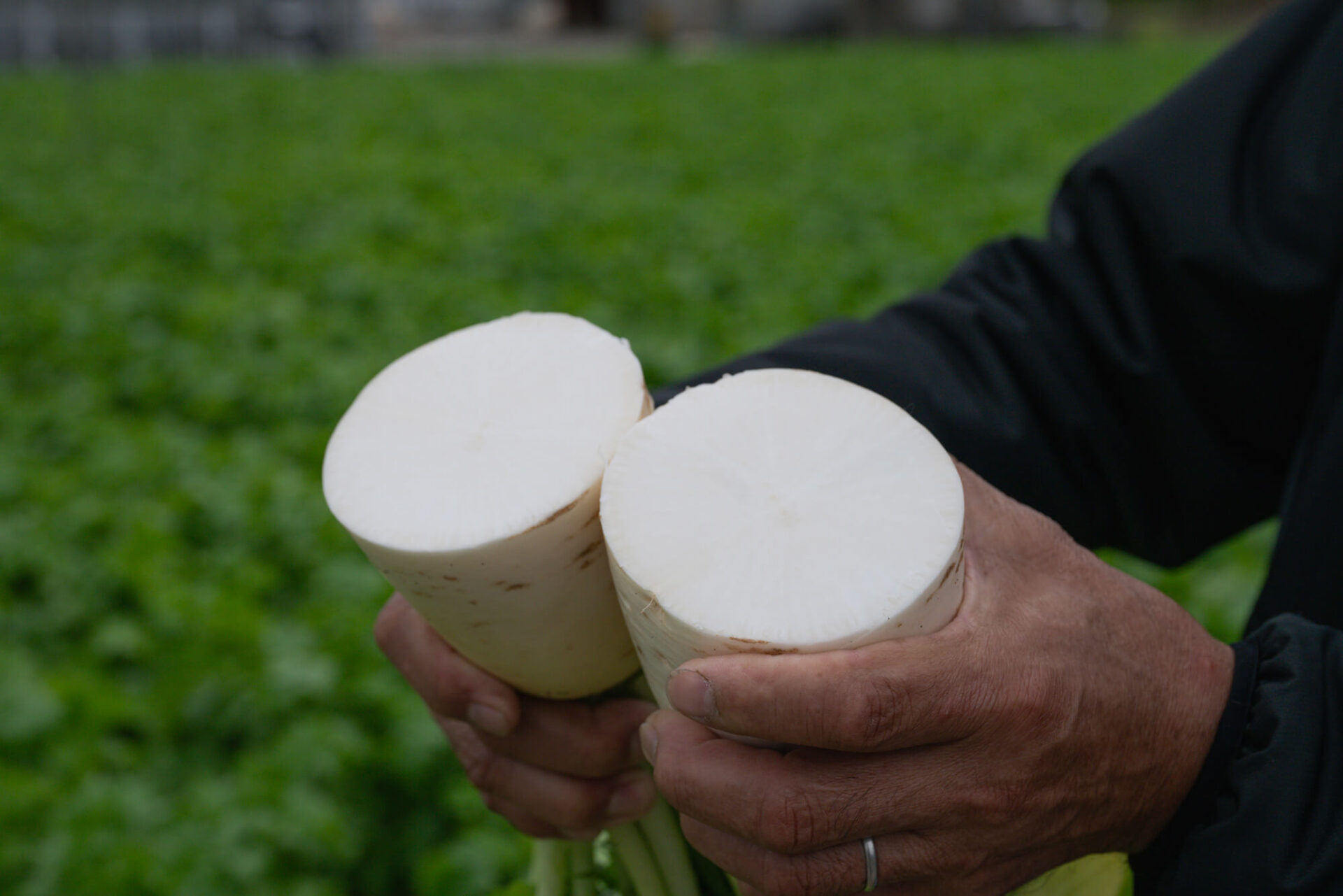
The secret to Gensuke daikon radishes’ great flavor is the farmers’ enthusiasm and day-to-day effort. “You have to go out to the fields every day to check in on the daikon radishes. See how they’re doing, listen to what they have to say, and just let them know you’re there,” Matsumoto explains. “Some of the more experienced farmers say that they can actually hear the vegetables speaking to them, but I haven’t quite reached that point myself,” he adds, a hint of modesty in his voice. By keeping an eye on them every day, though, he “can tell when it’s hotter out, or when they need some more water.” He’ll check the soil condition to see whether or not to water the daikon, and fertilize as necessary. “Gensuke daikon radishes take a lot of work, but it makes me love them that much more.”
Painstaking Efforts to Bring Incredibly Fresh Gensuke Daikon to Dinner Tables
Each day’s Gensuke daikon harvest begins around midnight. They are delicate enough that they are removed from the soil by hand, one by one, then rinsed clean. The way the dirt and mud give way to pure white as they are washed off is nothing short of remarkable to witness. “Honestly, it’s pretty rough,” says one of the younger farmers — understandably, given the work they do in the middle of the night, in the dead of winter. Nonetheless, they are all fueled by their passion to ensure that these fresh, juicy daikon radishes are ready to sell first thing in the morning.

Today, Matsumoto serves as both a mentor and “big brother” figure to the younger farmers in the association, and their collective trial-and-error efforts help to make Gensuke daikon more delicious and beautiful than ever. And around this time of year, the association’s conversations keep turning to the topic of daikon radishes — a sign of everyone’s shared passion and sense of responsibility for Gensuke daikon, and their desire to make them even better. The future of Gensuke daikon is built on this friendly rivalry shared by the younger farmers.
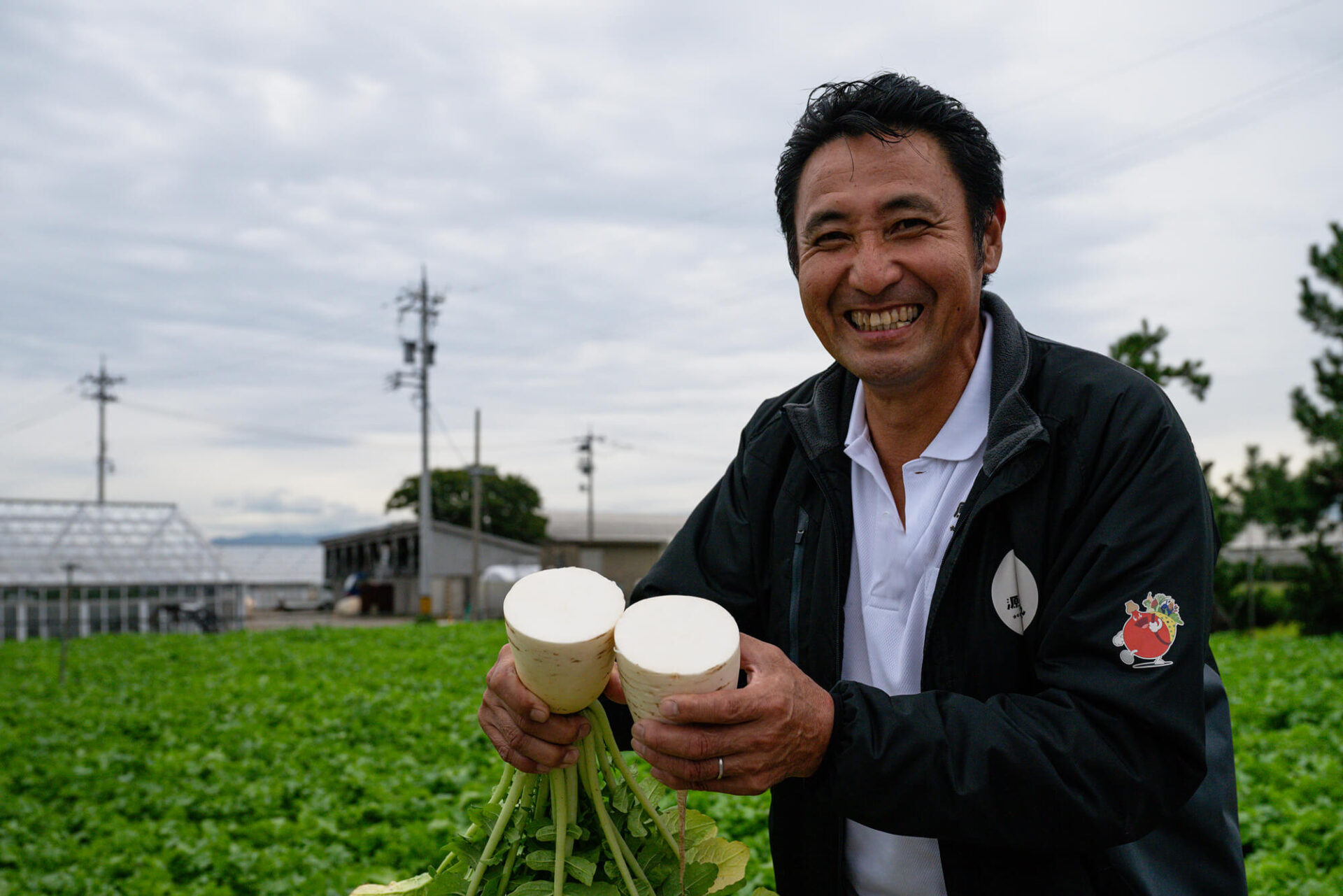
There are also new efforts underway to spread enthusiasm for Gensuke daikon, such as workshops held with schools in the region, as well as tour events that consumers are invited to. Incidentally, Matsumoto’s recommendation for preparing them? “I think stewing is probably the way to go. And once they’re cooked, they keep soaking up flavor. I like that gradual change, comparing day one with day two or day three.” Whether you stew them, fry them, roast them, or just eat them raw, Gensuke daikon radishes are always a welcome guest at the dinner table.