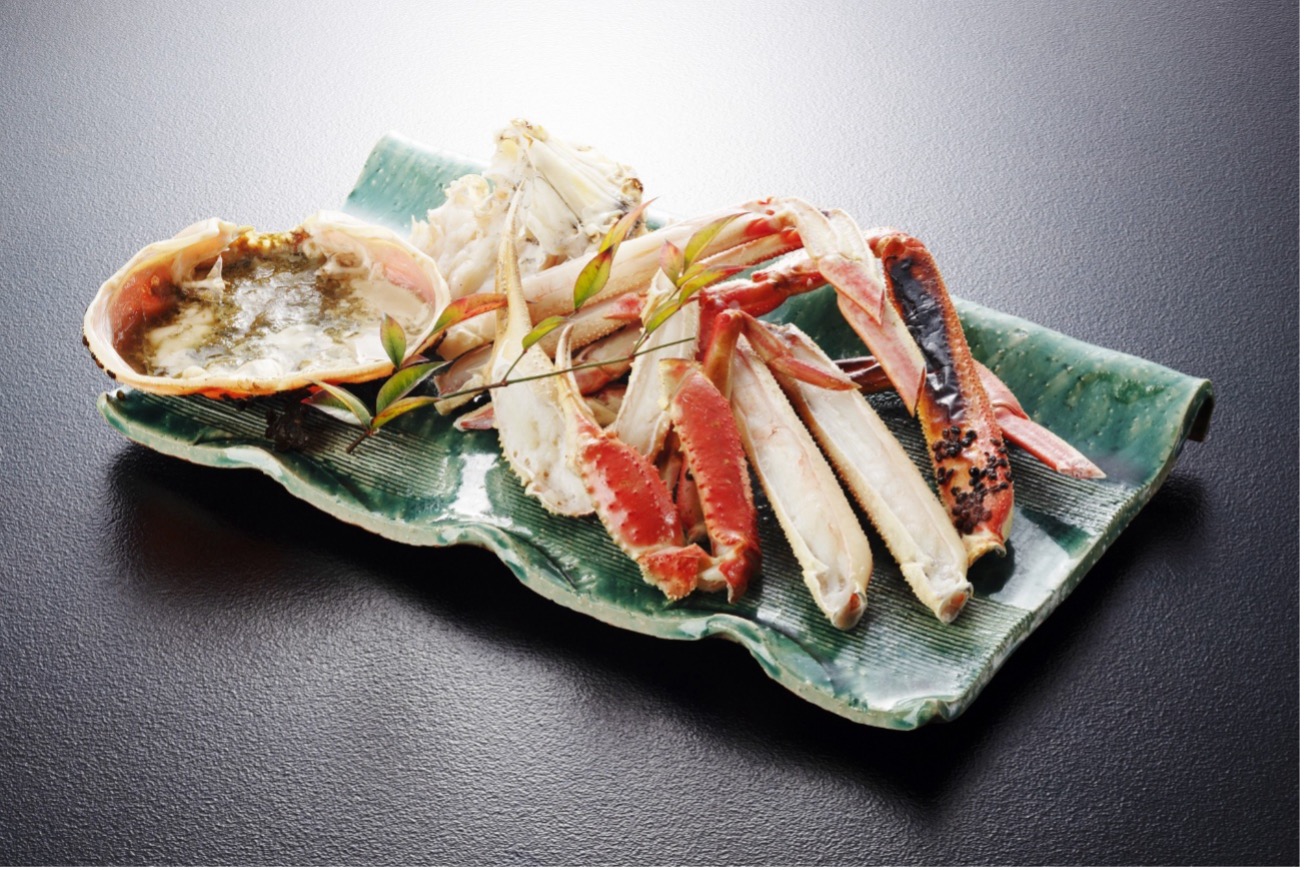
Kano Crab and Kobako Crab: Lighting Up Winter in Ishikawa with Treasures from the Deep Sea

Snow Crabs from Ishikawa Face Very High Standards of Quality
November 6 marks the start of snow crab fishing season. Snow crabs caught in Ishikawa are known by the names Kano Crabs (for males) and Kobako Crabs (for females).
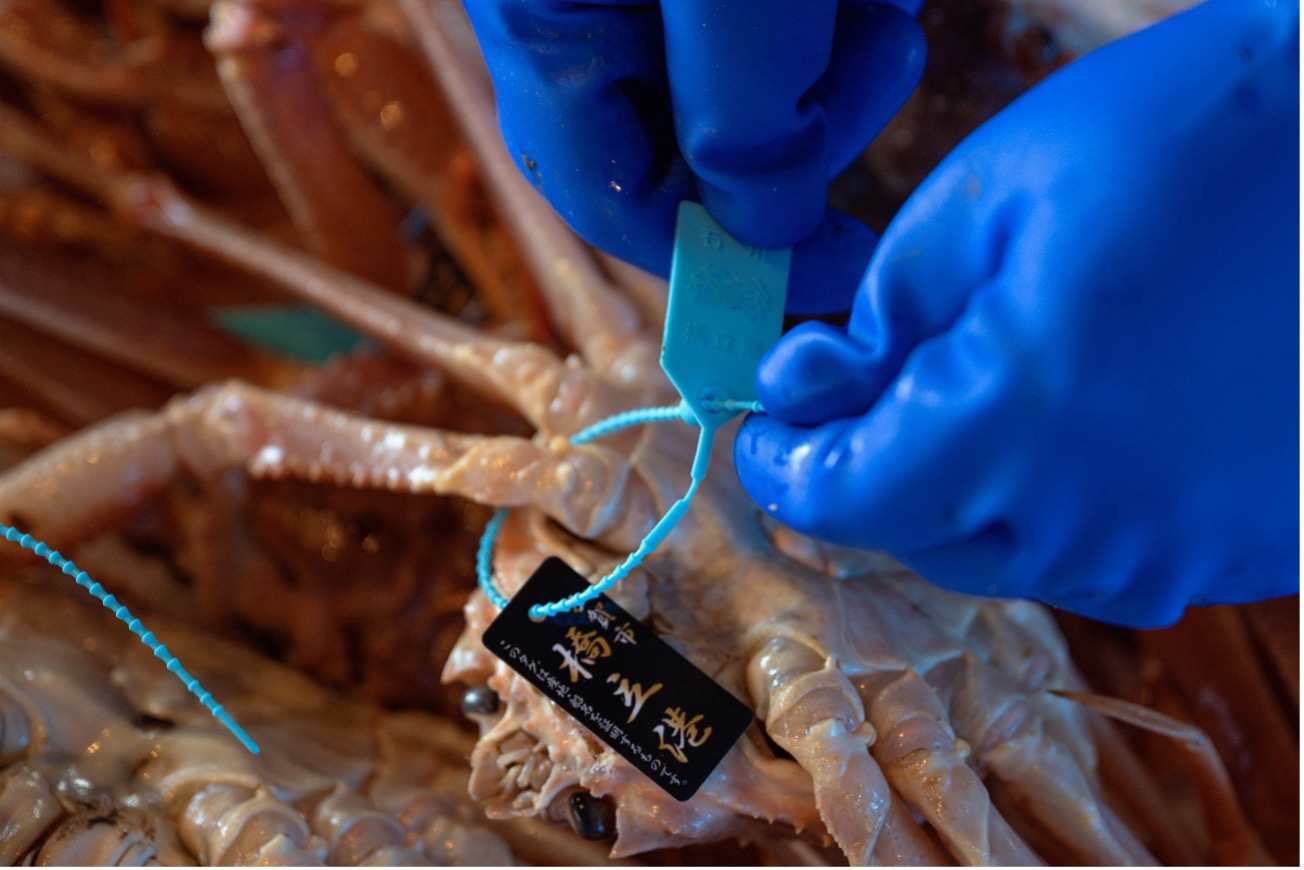
The name “Kano Crabs” combines the first sounds of Kaga and Noto, the two main regions of Ishikawa, to represent the integration of the prefecture’s fishing co-ops in 2006. The light blue tags on the crabs are a sign of the fishers’ confidence in them: that they are each packed full of flavorful leg meat and savory crab paste. It’s hard to miss the start of snow crab season here, with local markets and supermarkets full of crabs, drawing throngs of shoppers who have been eagerly awaiting this highlight of the season. Likewise, ryokan inns and all sorts of restaurants throughout Ishikawa offer the sorts of exceptional dishes available only at this time of year, making snow crab an iconic part of winter in Ishikawa.
Kobako Crabs are only about half as large as males, but what they lack in size they more than make up for in flavor, with their delicious eggs: the unfertilized orange uchiko eggs on the inside, and the brown sotoko eggs on the outside. In order to avoid overfishing and maintain populations, Kobako Crab fishing season is even shorter than Kano Crabs’, only running through December 29. This makes them all the more precious as a winter favorite in Ishikawa.
The year 2021 saw the debut of a new brand of super-premium Kano Crab: Kagayaki. The first auction of these crabs went for a remarkable ¥5,000,000, making that a story in its own right. Kagayaki has arguably the highest standards of any premium snow crab brand in Japan — in their first year, there were only nine Kagayaki Crabs, and as of November 2025, there have yet to be more than sixteen in an entire fishing season.
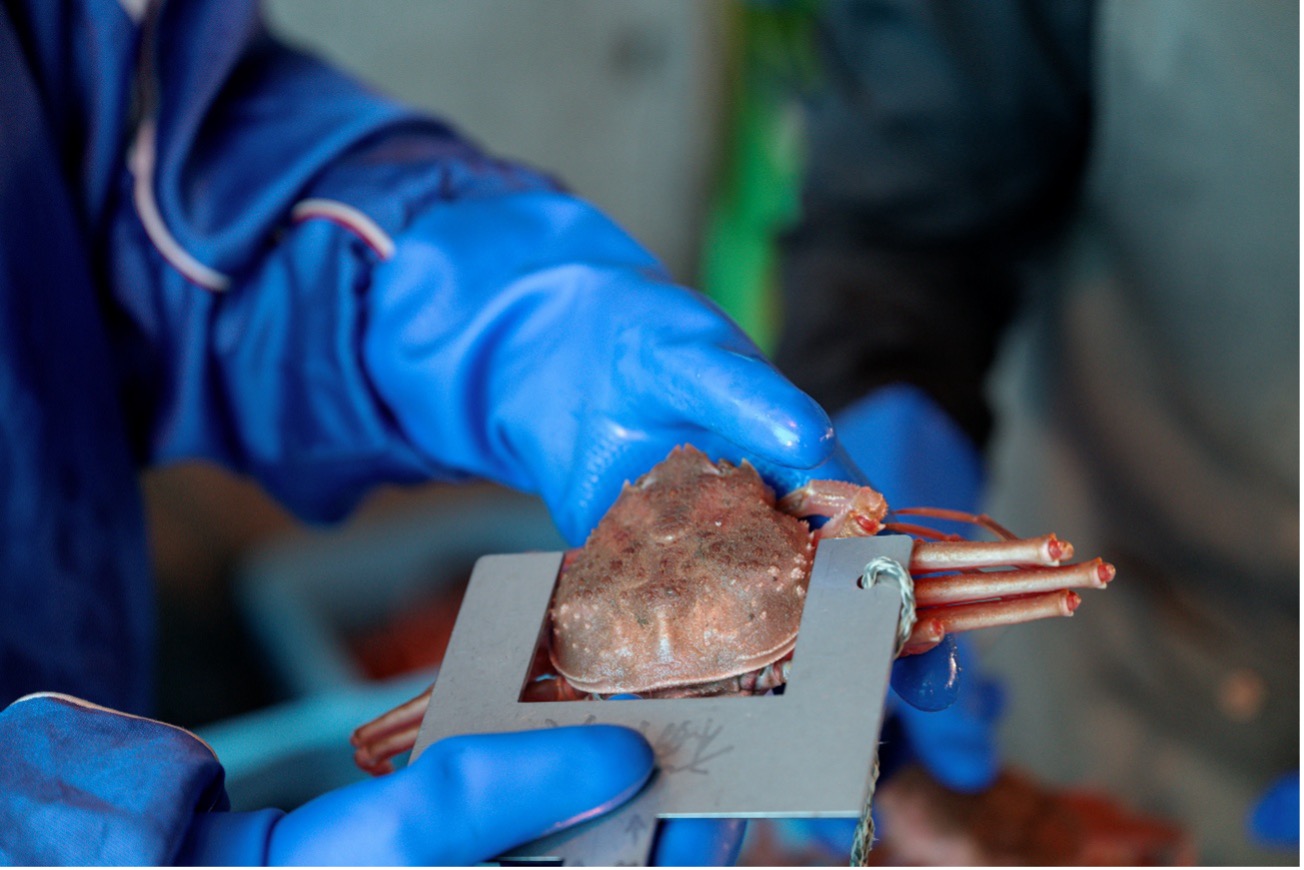
To be precise, Kagayaki Crabs must weigh at least 1.5 kg, must have a body at least 14.5 cm wide, must still have all their legs, must have plenty of leg meat and crab paste, must be unblemished and good-colored, and must be demonstrably very fresh (with the catch date noted on the tag), and the fisher must be actively involved in conservation efforts.
A year later in 2022, a new brand of super-premium Kobako Crab was launched as well, called Kagayaki-hime. Outside of needing to have a body at least 9.5 cm wide, these are held to the same quality standards as their male Kagayaki counterparts, and Ishikawa is the only place in Japan with this sort of super-premium brand of female snow crabs. In their first year, they were priced at ¥300,000. Much like Kagayaki, these crabs have drawn the attention of connoisseurs nationwide.
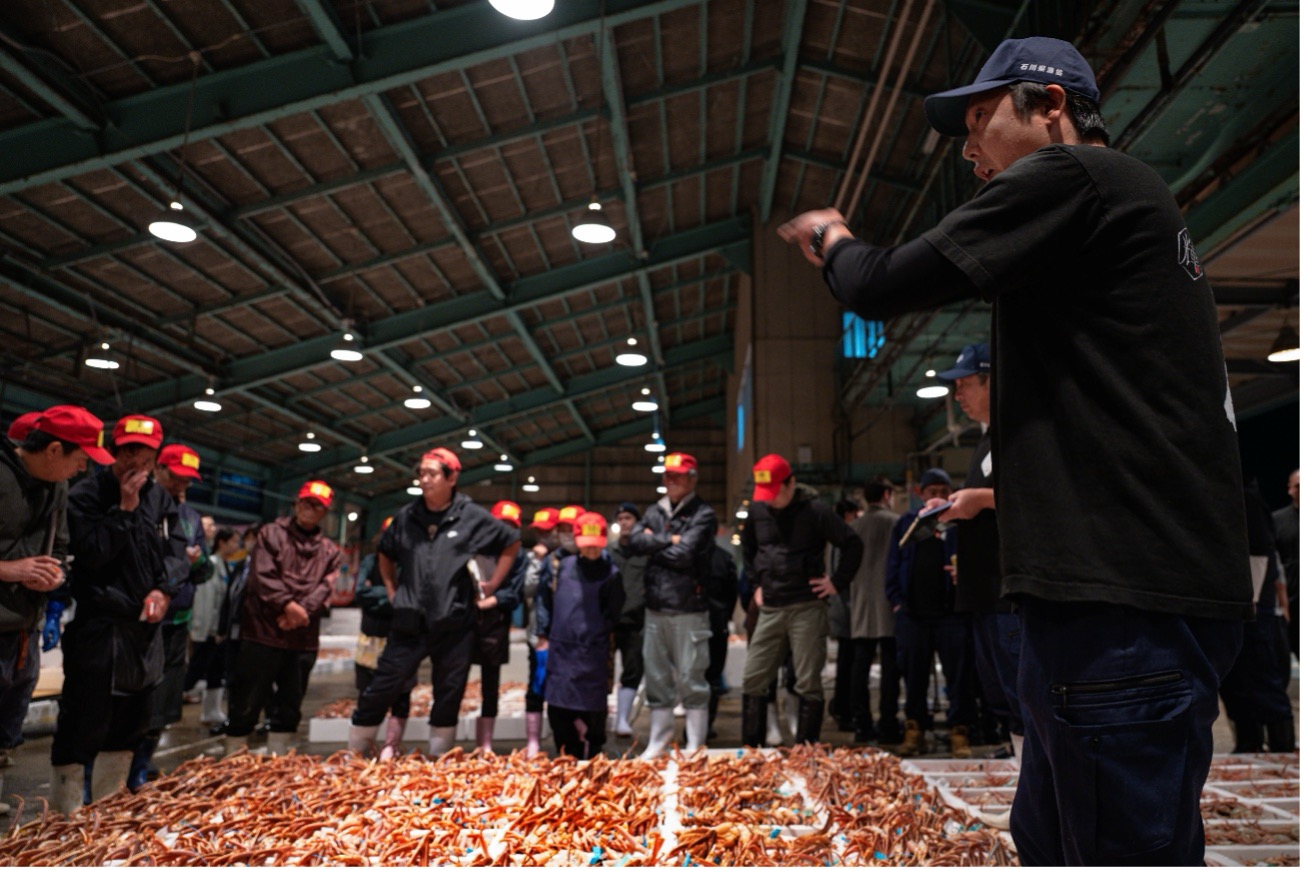
Daily Auctions of Live Crabs Ensure Peak Freshness
On the first day of snow crab fishing season, the air at the port buzzes with the fishers’ anxiety. “Part of why everyone’s so on edge is because some fishing boats will haul in 10% of their catch for the entire season today,” explains Katsuhisa Hashimoto, who is chair of the steering committee at the Kaga branch of Ishikawa’s fishing co-op, president of the Ishikawa Federation of Trawl Fisher Associations, and owner of the Dai-go Ebisu-maru fishing boat. “The boat that finds where the crabs are, on this first day, has a mysterious tendency to have the best hauls for the whole season. That’s why the first day of snow crab fishing season is so important to the fishers.”
One trademark of Kano Crabs is the freshness promised by the brand. Crabs tend to prefer to live 300–450 m deep, where the water is only 1–2°C. Virtually the entire Ishikawa coastline is lined with deep waters, which benefits fishers: there are good crab-fishing grounds just a few hours’ voyage from the port.
In Ishikawa, snow crabs are caught using trawl-fishing nets, but all of the fishing boats are relatively small-scale — less than 20 tons. Other regions of Japan use much larger fishing boats, up to 100 tons or so, which spend days at a time offshore catching crabs. Smaller boats can’t stay out as long, which means that catches come back the same day, ensuring fresher crabs at the auction.
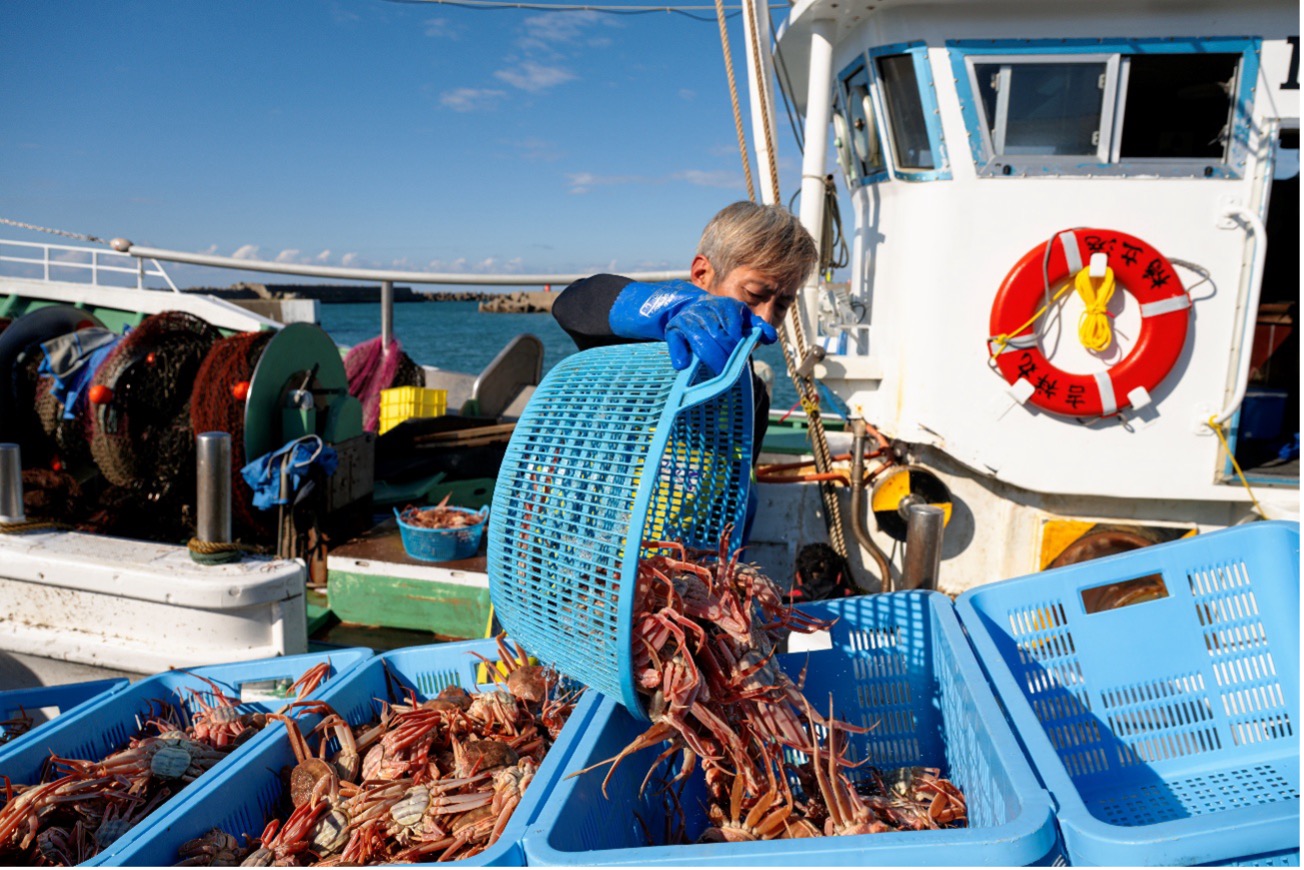
Intuition, Skill, and Discerning Judgment Help Fishers Bring Excellent Crabs to the Market
It goes without saying that the crabs hundreds of meters below the surface aren’t visible from the boat. “You have to rely on the captain’s intuition and experience,” says Hashimoto. At the same time, too, good hauls in one spot last year are no guarantee that the same place will have many to offer this year. Even so, fishing boat captains have mental models of the sea floor, and they keep careful track of the length of the rope and other changes with their finely honed sensibilities, in order to adjust the shape of the net to haul up crabs.
The high quality of Kano Crabs is also due in part to conservation efforts. Snow crabs molt once or twice a year — twelve or thirteen times over their lifetime — and each time, they are left with a clean new shell. For most of the crabs we eat, it has been about thirteen years since their final molting (which, means, incidentally, that crabs that meet the Kagayaki standard of remaining more or less entirely unharmed for over a decade are nothing short of miraculous!). Crabs that have just molted are called “soft-shell” crabs, and Ishikawa has banned catching these in order to preserve crab populations.
The crabs are sorted as soon as they’re hauled aboard the boat. The fishers check if the size of their bodies and their color meet certain standards, whether they have all their legs, and whether they’re properly packed with meat, in order to ship out only the mature crabs worthy of going to market — handling them all like this, one by one, can be enough to wear their fingerprints off. The crabs that don’t pass muster, as well as the soft-shell crabs and immature crabs, are released back into the sea from the fishing boat. This system not only ensures that only excellent crabs come ashore at the ports, but also maintains consistent hauls from year to year by leaving immature crabs in the wild.
The ¥250,000 Five-Pack Was a Wake-Up Call about the Danger of Overfishing
Five or six years ago, Hashimoto says, he found himself suddenly coming around to the need for conservation after living through a near-crabless crab fishing season. “They were going for unimaginable prices — something like ¥250,000 for a box of five crabs. I felt this sense of crisis, that if we didn’t do something quickly, soon there wouldn’t be any more crabs left for us to eat.”
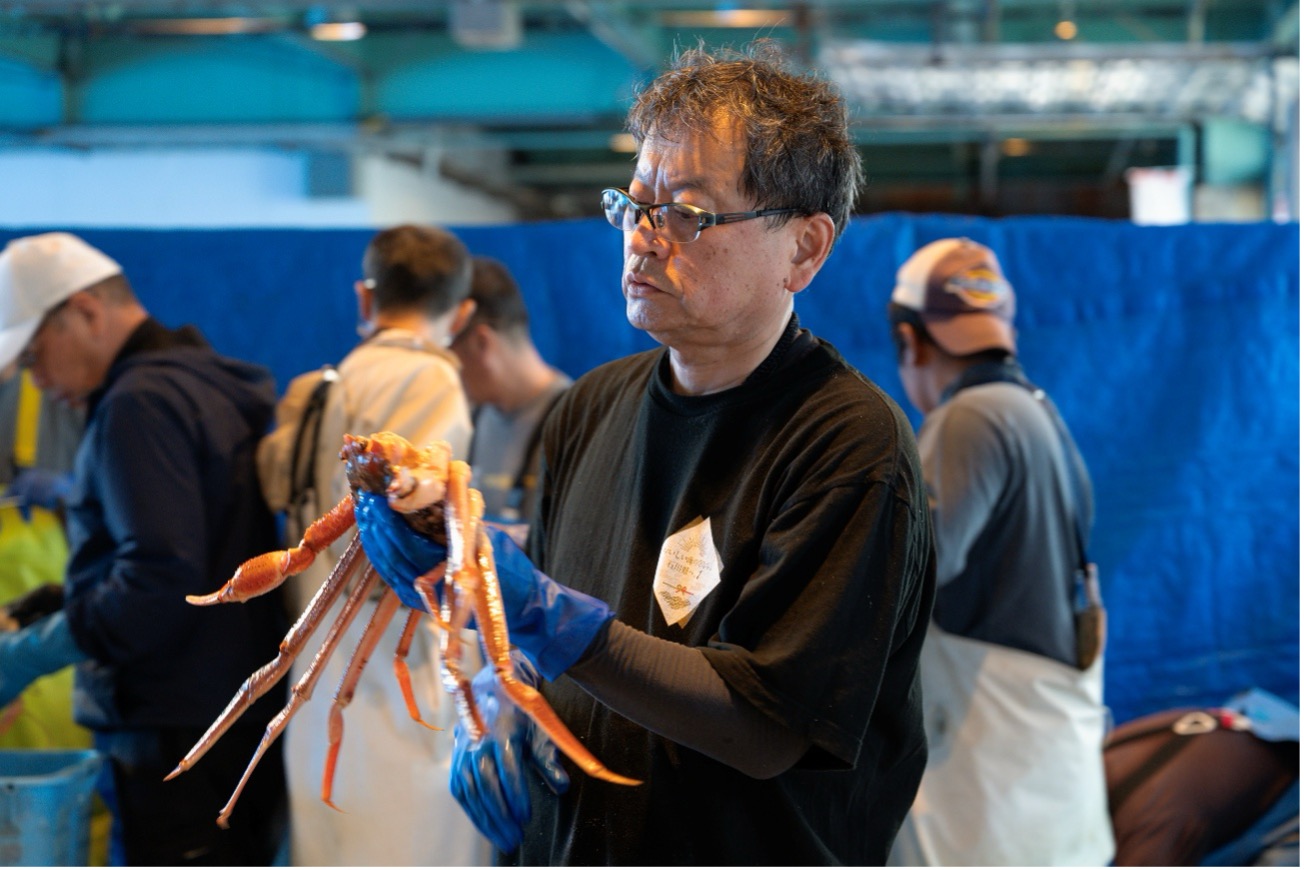
Thanks to work done by the Japan Fisheries Research and Education Agency, though, it is now possible to estimate crab populations. Based on the agency’s recommendations, Ishikawa has held a number of study sessions with shipowners and captains to discuss conservation. In order to ensure a consistent supply of crabs through the season while still conserving their populations, there are maximums for the number of crabs that can be hauled ashore at each port and the number of crabs each boat can catch per day. There are even days set that the fishers have to take off, in order to at least somewhat limit the amount of time they spend offshore. These new operating rules have also led to higher-quality crabs, which in turn have further strengthened the Kano Crab brand’s public image.
In addition to their light blue tags, as of 2025 all Kano Crabs now also have a tag that indicates which boat caught them. This change leads to even greater demands being made of the fishers’ skill and discernment, but it was also driven by their passion to provide ever-better crabs. Efforts like this have contributed to Kano Crabs’ reputation for being something truly exquisite, to be enjoyed on special occasions with special people.
“Pick of the Day” — Because Who Would Know Crab Excellence Better than Fishing Boat Captains?
2025 also saw the launch of a new project that aims to further raise brand awareness around Kano Crab, so that even more people might learn about and enjoy these crabs.
Each day, every fishing boat can select a single crab as their Ichiban-Oshi — “pick of the day,” essentially. In addition to the usual blue Kano Crab tag and the tag indicating which boat caught it, these particularly choice crabs are also awarded a special Kutani Ware ceramic tag.
The story behind this approach is interesting in its own right: there was talk of launching another brand along the lines of Kagayaki and Kagayaki-hime, but the fishers wanted to try something completely unprecedented.
Even if none of their crabs for the day meet the extraordinarily high standards of Kagayaki or Kagayaki-hime, fishing boat captains have the right to give their personal stamp of approval to a particularly good crab, and these crabs are auctioned off each day, one by one. Naturally, if none of a given boat’s crabs deserve such an endorsement on a given day, then there simply won’t be one from that captain.
Nowadays, on days when the weather is good, there are roughly a hundred fishing boats out on the sea, so if the day’s catch goes well, there could be about a hundred Ichiban-Oshi crabs on the market for that day.
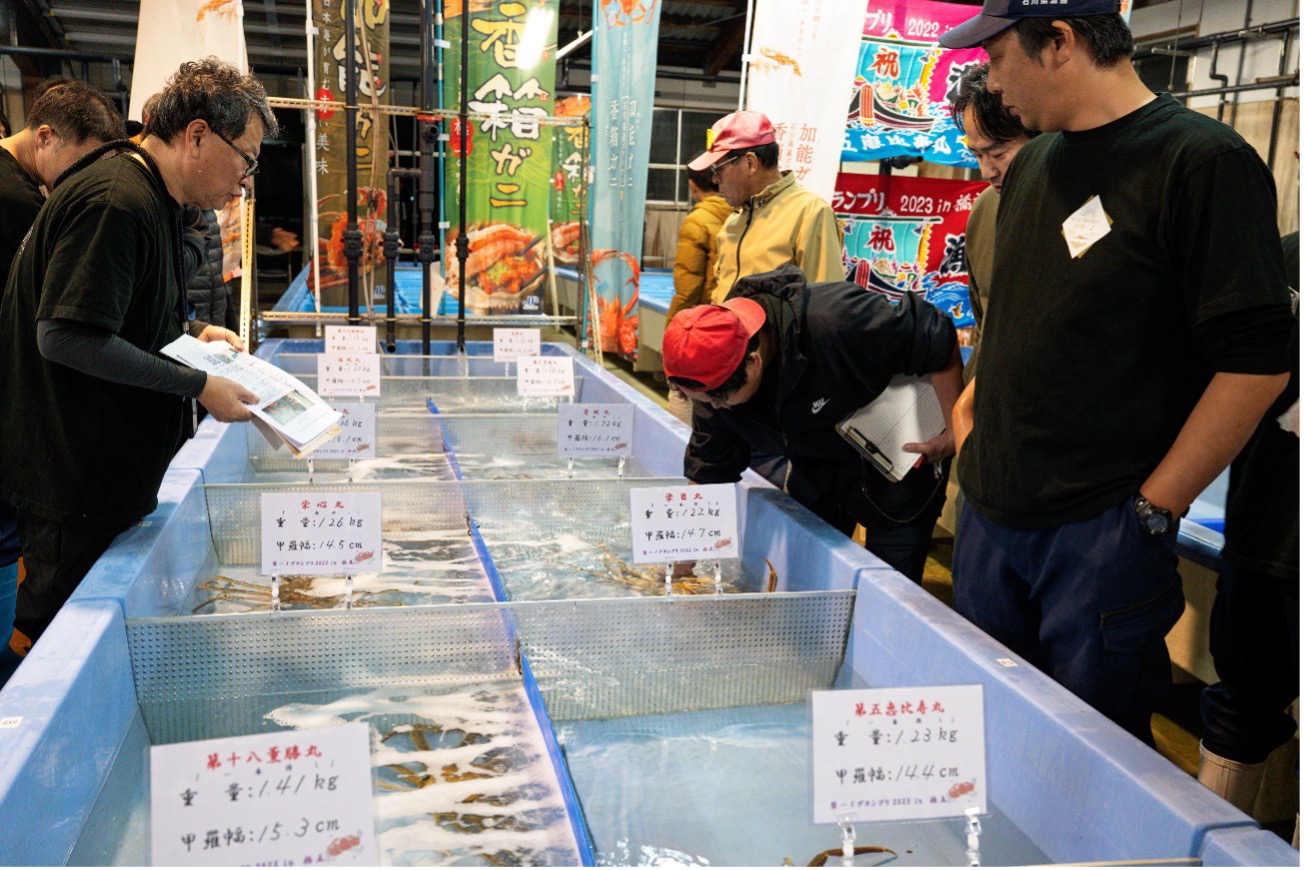
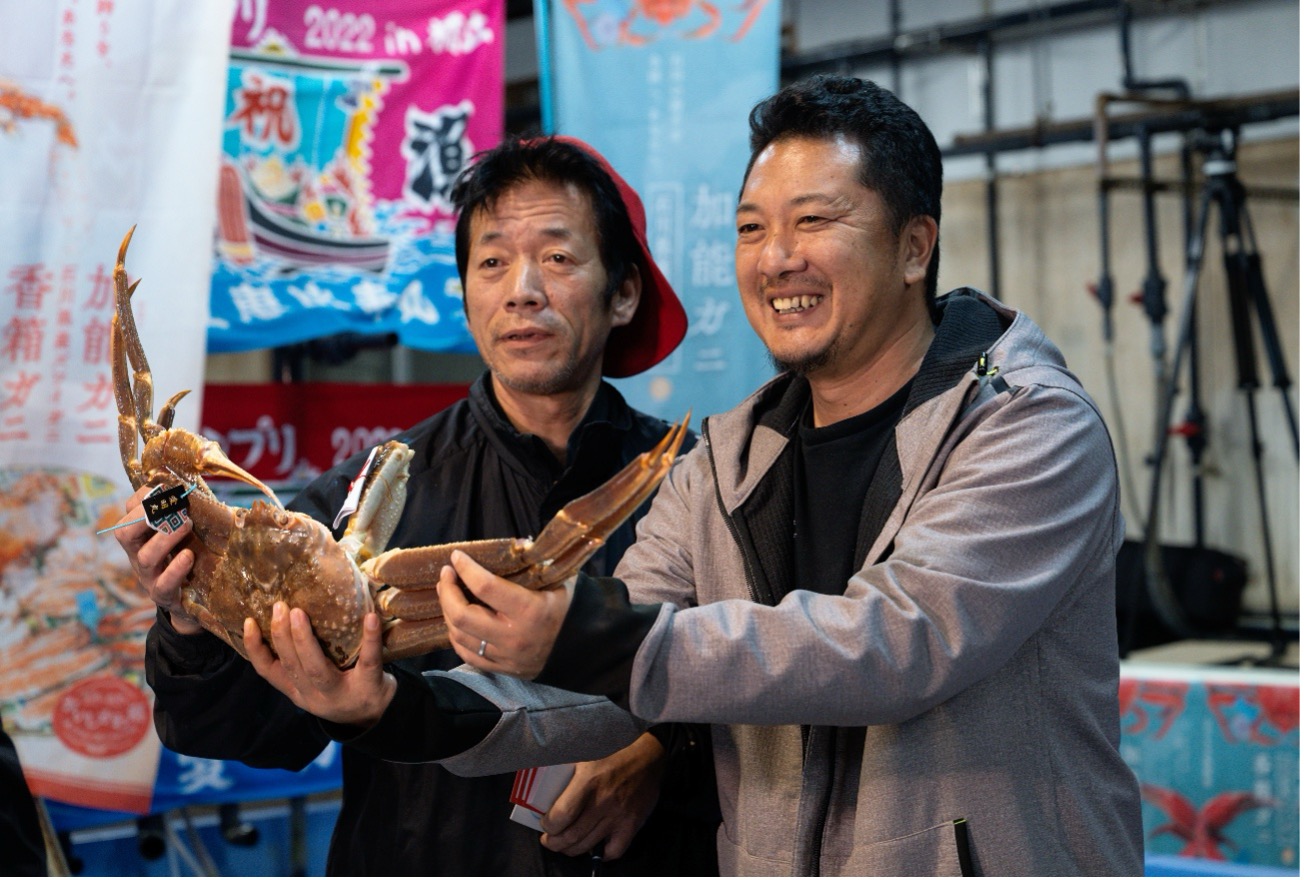
While crab fishing season still runs from November 6 to March 20, the number of actual fishing days has seen a marked downturn in recent years, due to poor catches and unusual weather — the 2024 fishing season had only twenty or thirty fishing days. It’s a stark reminder of how lucky we are to have snow crab to enjoy in the first place.
Ishikawa Is the Perfect Place to Enjoy Crab at Its Best
We asked Hashimoto about his own favorite way to have Kano Crab. “I like to take the crab’s shell and put in some crab paste and leg meat, add a bit of sake, and put it over a charcoal flame. Then I eat it while the crab paste and meat meld together. There’s all sorts of seafood out there, but I think that crab paste is enough to put crab up and over any fish.”
He also pointed out that there’s no better place to have Kano Crab than Ishikawa. “It’s something to savor with all of your senses. Not just the crab itself, but the dishes, the air, the surrounding environment, the local culture. I want people to come to Ishikawa, to eat crab here in a restaurant with a view of the Sea of Japan.”
Kano and Kobako Crabs remain a treasured part of winter in Ishikawa, made possible through the dedicated passion of fishers, careful conservation efforts, and a focus on great flavor. And once you’ve tried an Ichiban-Oshi pick of the day, that fondness for those fishers offers a delicious finishing touch.