Deliciously Thick, Rich, and Sticky: the Kaga Maruimo Yams Grown along the Tedori River
As Beloved for Their Rich, Sticky Consistency as Their Great Flavor
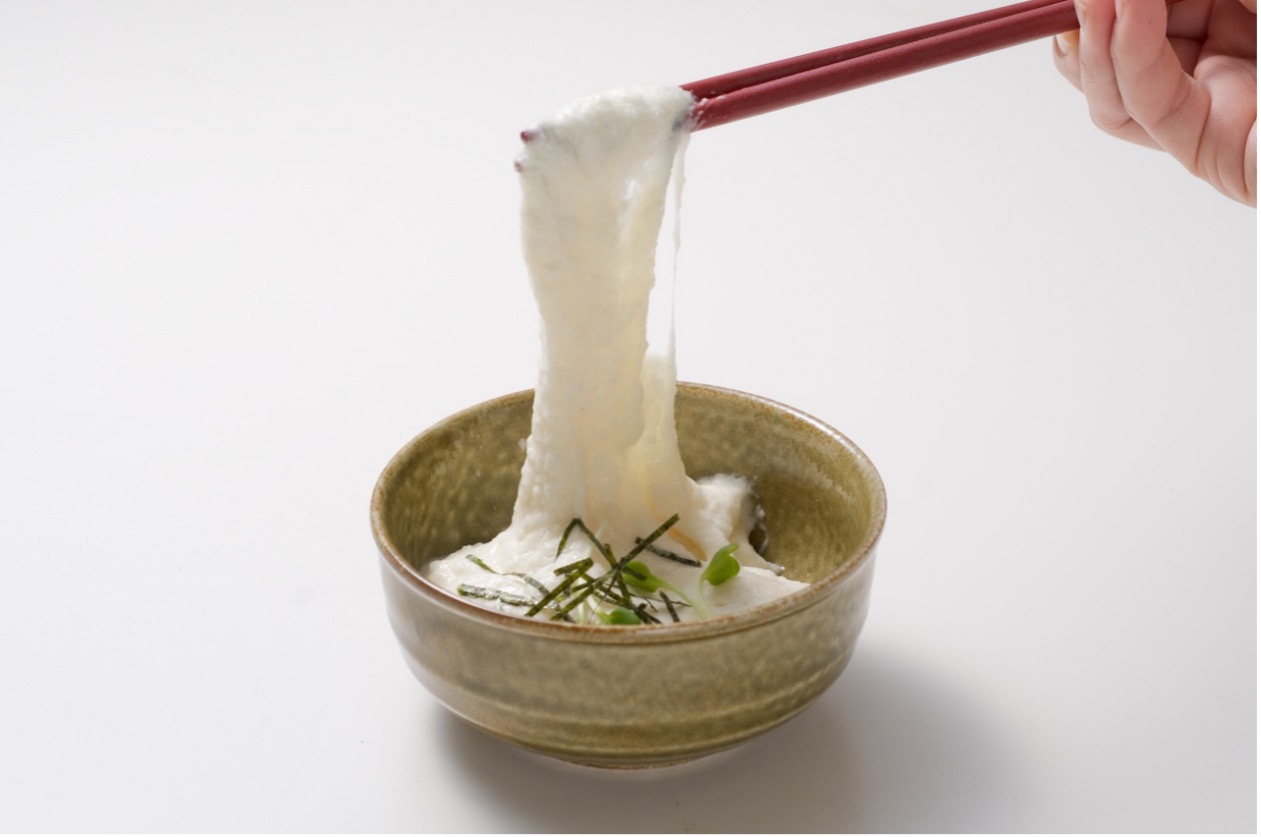
Kaga Maruimo yams have an impressive presence and pleasing feel. When grated, they take on such a sticky consistency that you can turn the bowl upside-down and the grated yam won’t fall out. Up through around 1950 or so, these were sold primarily in the Western Japan market as an Ishikawa specialty, under the name “Yamano yams.” As shipments increased, they took on a new name: Kaga Maruimo yams.
These yams are grown primarily in Nomi and Komatsu, with the twenty growers shipping out roughly 93 tons in 2023.
To celebrate 100 years of growing Kaga Maruimo yams, in 2013, the South Kaga District Maruimo Production Council was established by the Kaga Maruimo Yam Associations at the three JA farming co-ops covering the production area. The council works to improve production of Kaga Maruimo, and to strengthen their branding.
Maruimo yams were first introduced to the area back in the early 20th century. Some say that it was due to two villagers from what was then the town of Neagari, Nisamatsu Sawada and Chusaku Akita, who visited Ise (to the south, in Mie), and while they were there, they had rice topped with grated Ise yam. They were so impressed with how good it was, that they took some yams home to share with their families, and this marked the start of farming them here. Today, the head of JA Neagari’s Kaga Maruimo Yam Association is Yuichiro Sawada, the grandson of Nisamatsu Sawada.
A Production Area Expanded by the Flooding Tedori River
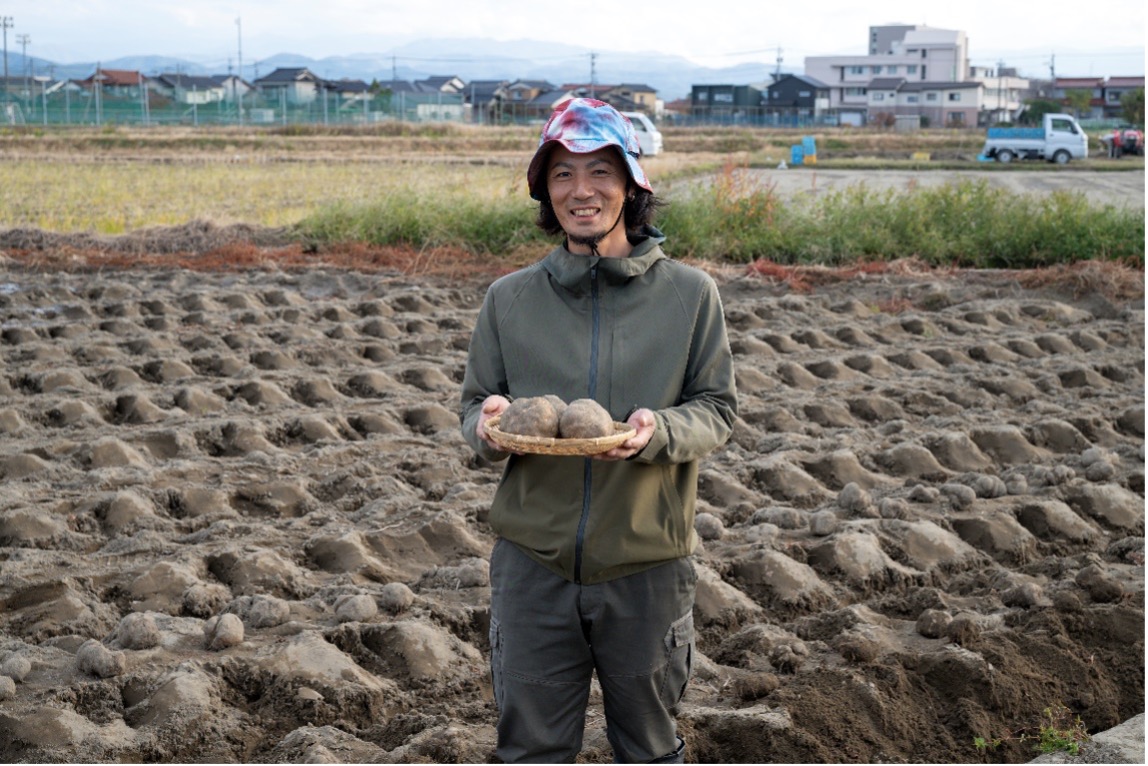
Sawada’s roughly 2.4 hectares of paddy fields are used to grow rice and Kaga Maruimo yams, in a repeating cycle: he grows rice in each for two years, then yams for one. “Growing rice affects the quality of the soil in a way that, I feel, makes for better yams,” he says.
The soil in the paddies contains sand, giving it a somewhat smooth, silky feel to the touch.
Cultivation of Kaga Maruimo yams began around 1928, but six years later, there was flooding from the Tedori River, which runs through the area. The original paddy fields used by Sawada were in a muddy area, but the flood waters brought sandy soil. This proved to be a blessing in disguise: mixing sand in with the soil helped improve drainage, making it well suited for growing Kaga Maruimo yams. After the Tedori River flooded, more farmers began to grow these yams in the sandy loam soil that now covered much of the area. This soft, sandy soil offers the yams a stress-free growing environment, which is seemingly a key reason for their round shape.
The Secret to Flavor: Growing in Well-Drained Sandy Loam Soil
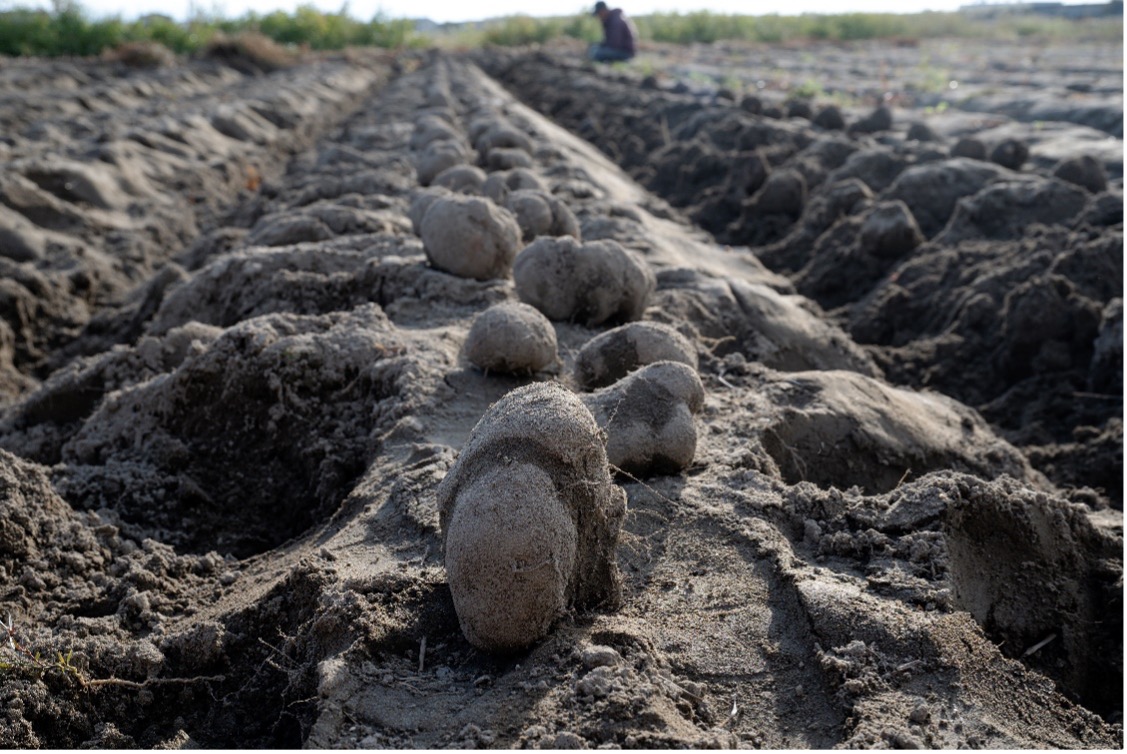
The Kaga Maruimo yam growing season begins in October, with farmers making ridges in the soil. Building these long, narrow ridges of raised soil around this time of year helps prepare the soil to better retain water under the snow, until the seed yams are planted in spring. A few months later, around the end of February, properly-shaped yams are cut into equal portions and coated with minerals like lime, to prepare them for use as the seed yams planted in March and April.
In June, stakes are inserted into the ridges, providing supports for the growing vines to wrap around. These help limit harm from diseases and pests, and ensure that the leaves can soak up plenty of sunlight. Summer, Sawada says, consists more or less entirely of weeding all day, which is necessary to prevent weeds from covering up the soil. The soil itself also needs a certain amount of sun exposure, as well. Sawada’s mornings begin at 5:00, and the work goes all day long. Summer is truly Sisyphean: once a paddy has been completely weeded, it only takes three days for it to be covered once more, at which point it’s time to weed it again.
When it comes to watering the yams, Sawada says he relies almost entirely on rainwater, since the groundwater fully permeates the growing area. Overly moist soil, however, can harm the quality of the yams, while overly dry soil can cause them to lose their stickiness. In the end, the finest maruimo yams come from well-draining soil that has sand mixed in.
Younger Farmers Leading the Effort toward Premium Brand-Name Yams
Sawada followed in his father’s footsteps as a farmer, and works together with peers in their thirties and forties, as well as older and more experienced farmers, who all grow Kaga Maruimo yams. Remarkably, he actually had no particular interest in growing yams at first. As he searched for the sort of job that only he could do, he came to recognize the value of the family business of growing Kaga Maruimo yams, and decided to take up farming.
“I both love and hate the way that there’s no way of knowing how the yams are doing as they grow underground, until you dig them up at harvest time and find out.”
He maintains a respect for traditional farming methods, while also working to incorporate promising new ideas developed through study sessions with other farmers. To date, these ideas have included labor-saving efforts like applying mulching film onto ridges covered in rice straw and using machinery to dig up the yams, as well as trying out organic fertilizers like poultry manure.
A Human Touch until the Moment They’re Shipped Out
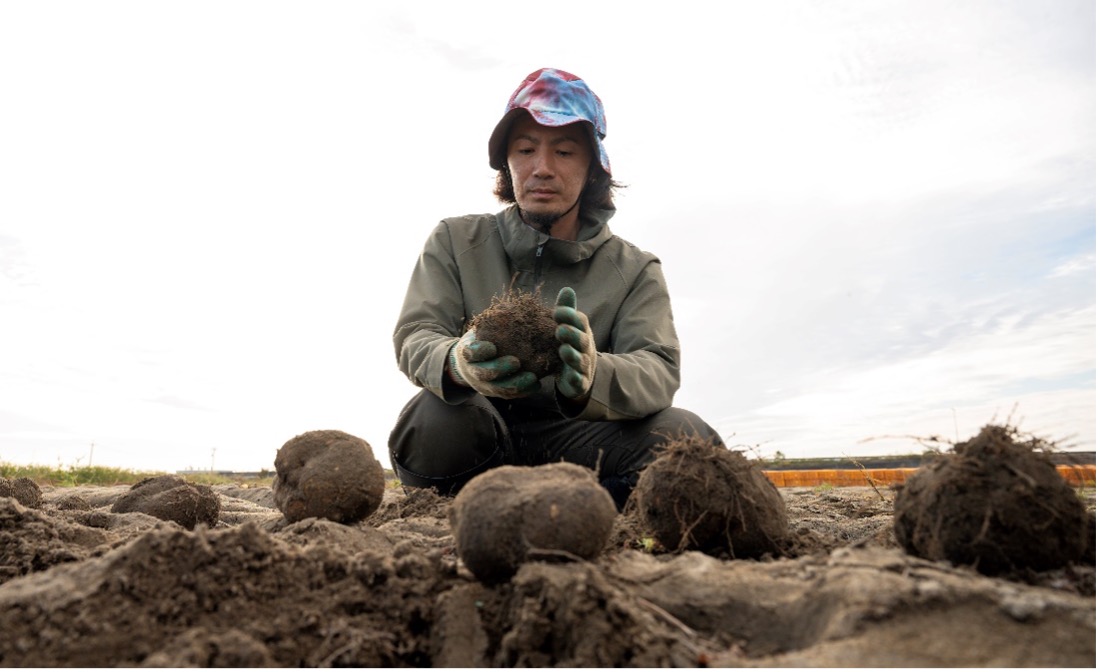
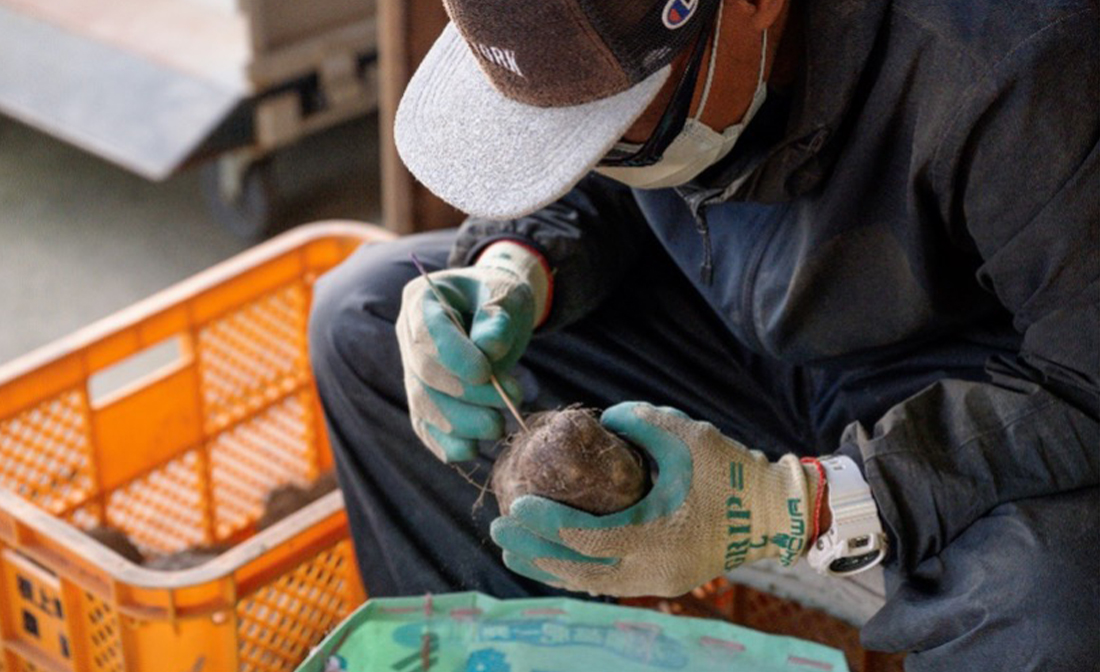
Harvest season runs from the end of October through November. The yams’ peels are very delicate, so they are handled carefully to avoid any damage. Ideally, Kaga Maruimo yams should be as close to spherical as possible, and have thin peels. After the yams are dug up, they are brought to the work area to be cleaned off one by one, using tools like brushes and skewers to remove soil from all the nooks and crannies, and the fine “whisker” roots are carefully trimmed off with scissors.
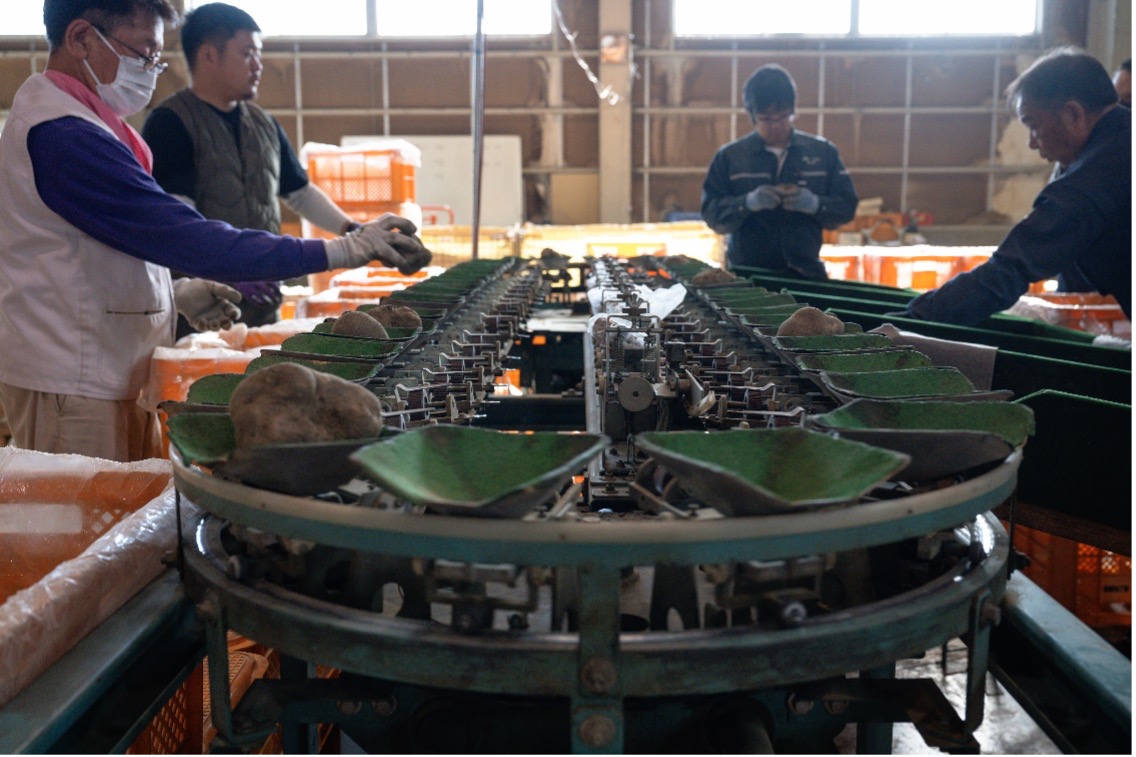
The yams are then transported to the local JA co-op, where they are placed, one by one, onto a special machine that automatically sorts them by size.
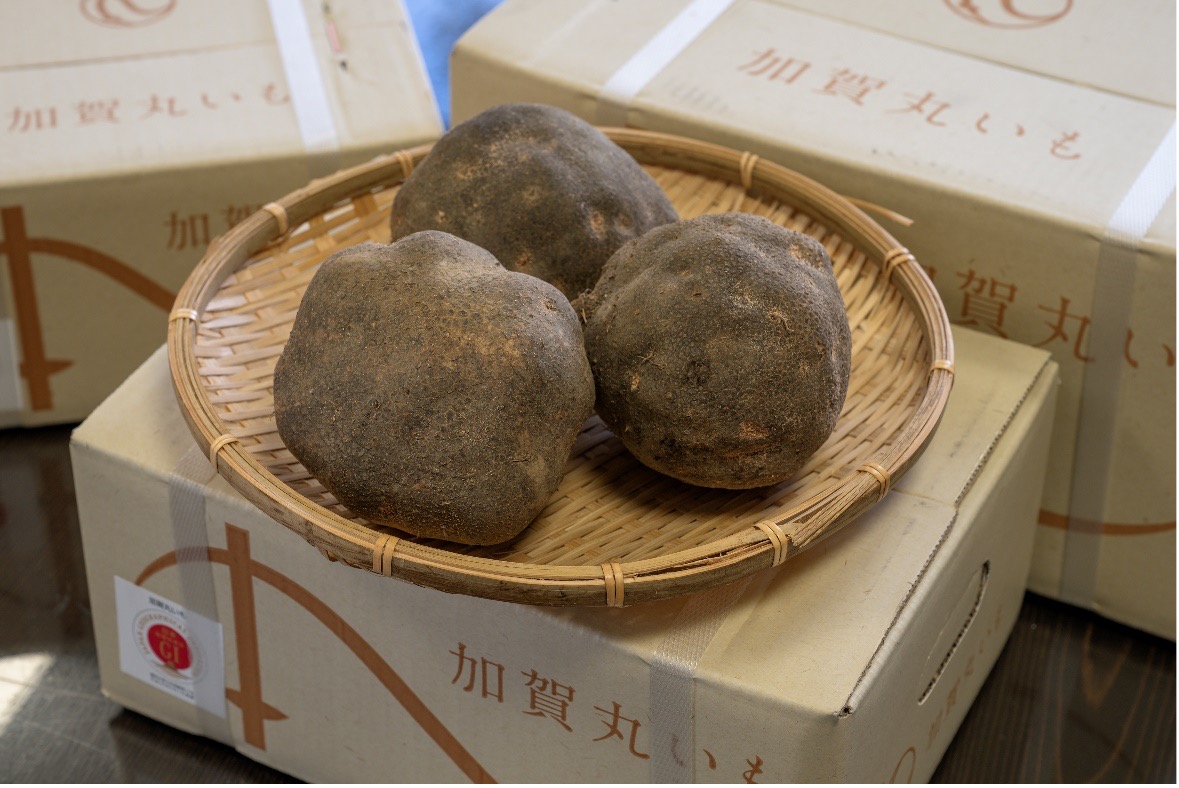
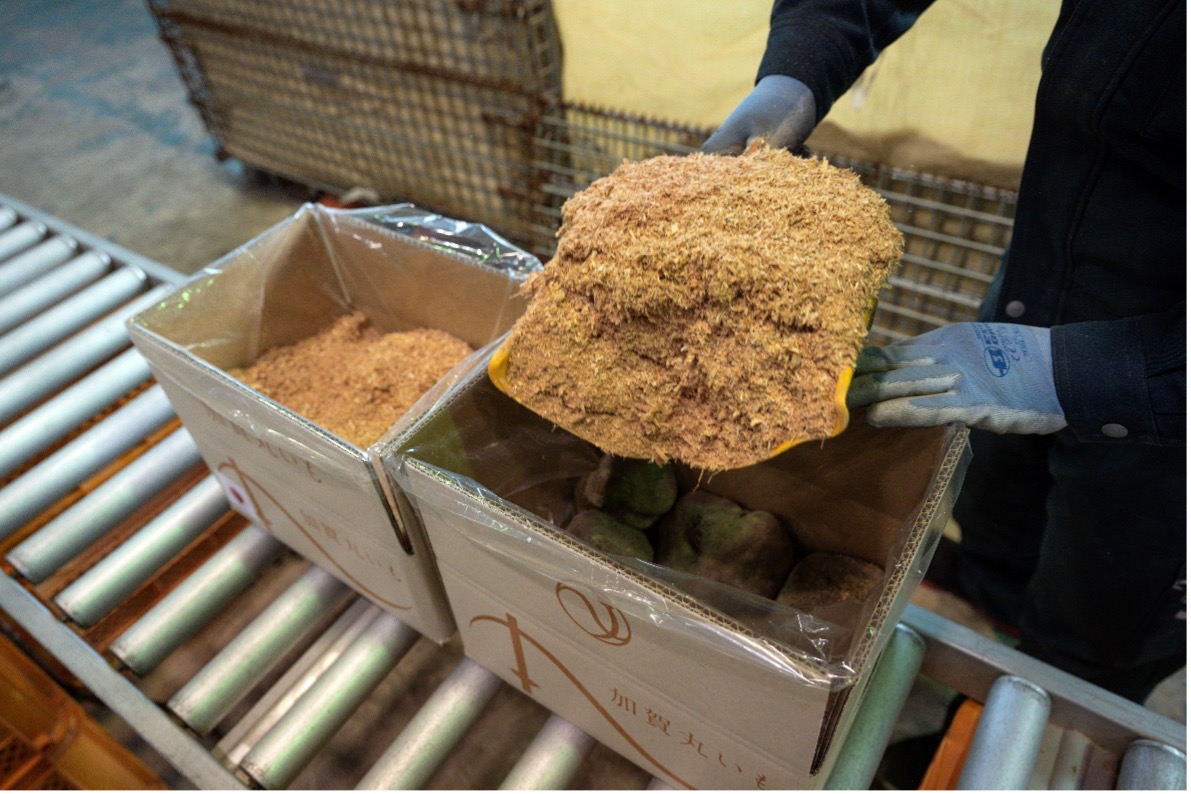
The average Kaga Maruimo yam is about the size of a softball, and weighs 400–500 g. They are each assigned a size from S to 2XL and one of five quality rankings. The yams are then packed in cardboard boxes filled with sawdust, to help protect them from moisture and mold.
Simply Grate and Serve to Enjoy Kara Maruimo Yams at Their Best
Kaga Maruimo yams are rich in starches that can be readily absorbed by the body without cooking. They contain three times as much starch-splitting enzyme as daikon radishes, so they are believed to be a great source of energy. They are also rich in vitamin B₁ and potassium, which can help prevent or reduce high blood pressure.
Sawada’s serving recommendation is a classic: raw, grated yam. “If you grate it a bit coarse, that leaves nice crunchy bits to enjoy. It’s perfect with just some soy sauce and wasabi.”
There are plenty of other ways to enjoy it, too, like grated and mixed with dashi stock to make a thick soup, or wrapped in nori or green shiso leaf and deep-fried, or as an ingredient in seafood bowls or okonomiyaki.
There have also been more prepared products made with Kaga Maruimo yams, too. One of these is Nomiyoshi, shochu spirits made in Nomi, Ishikawa. A local sake brewery was awarded Ishikawa’s first license to produce yam shochu, and the results have won awards at national competitions. There are also somen noodles and hand-stretched udon noodles made with Kaga Maruimo yam, giving them a satisfyingly firm bite, a glossy luster, and a rich aroma.
Kaga Maruimo yams have been garnering more and more new fans all across Japan, who find that, when they go back to regular nagaimo yam, there’s just something…missing. That distinctive rich stickiness just might become your new favorite, too.