Everyone Smiles after Their First Bite of Gorojima Kintoki Sweet Potatoes
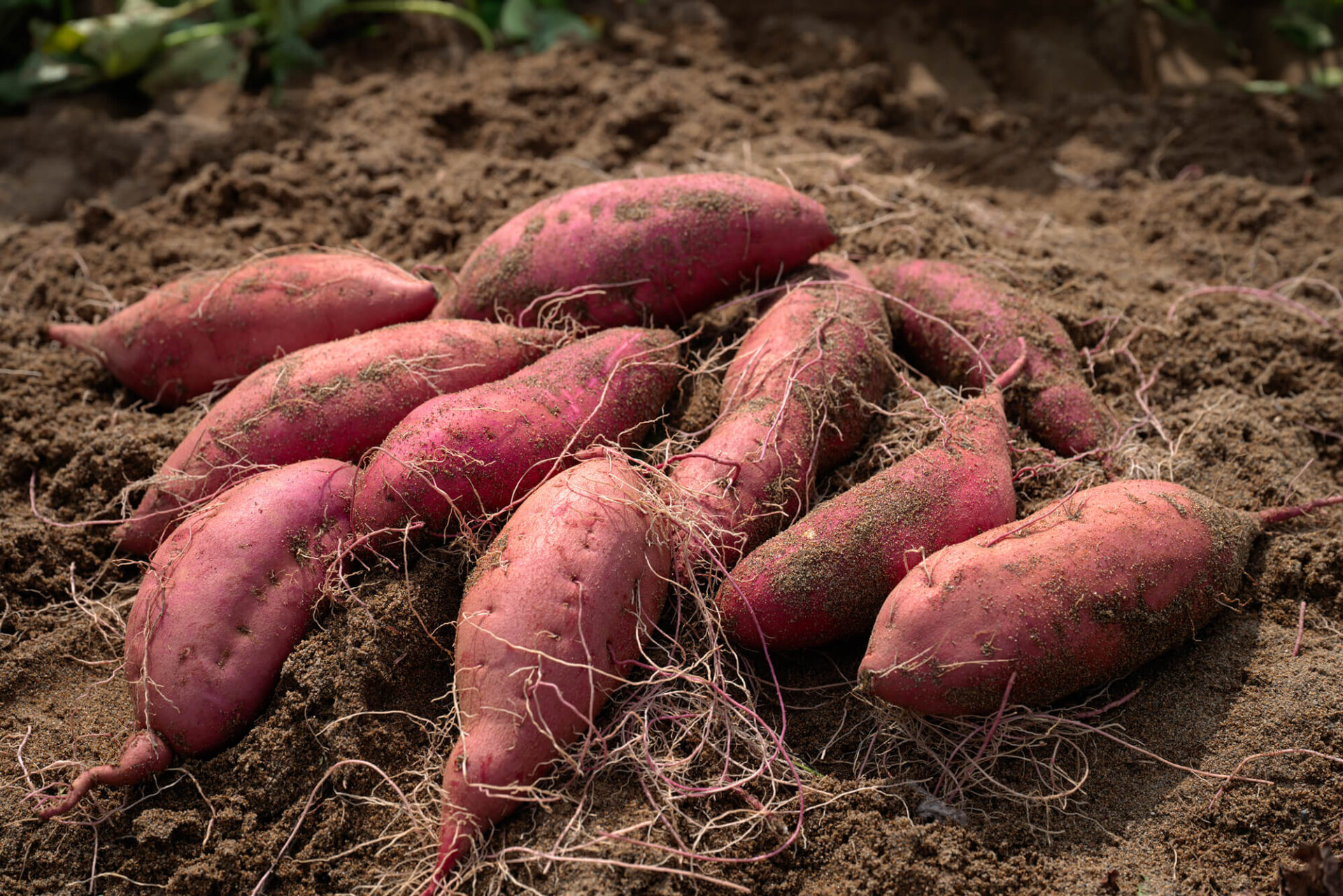
A Rare Case of a Local Specialty Grown in Sandy Soil
Ishikawa’s Gorojima Kintoki sweet potatoes have a flavor that makes them a perfect ingredient for old-fashioned treats like manju and dango dumplings, contemporary Western-style desserts like pound cake, and even shochu spirits. They are a beloved symbol of autumn in Ishikawa.
The story of these sweet potatoes begins over 300 years ago. According to legend, a wealthy farmer named Taroemon brought seed potatoes from Satsuma Province (in present-day Kagoshima) back to the village of Gorojima, to grow them there. In the late 19th century, they were first grown in sand dune fields near Gorojima, created through land reclamation, and this marked the start of commercial farming of these sweet potatoes. Since then, they have come to be grown all throughout the village. In 1984, they were officially named Gorojima Kintoki sweet potatoes, and they have become known throughout Japan for their lovely ruddy purple color, pleasing shape, and rich sweetness.
Today, they are grown mostly in sandy areas of Gorojima, Awagasaki, and Ono, all located within Kanazawa’s city limits. Tetsuji Tadamura, the head of the JA Kanazawa Gorojima Sweet Potato Producers’ Association, has been growing Gorojima Kintoki sweet potatoes for about twenty years, ever since taking over his late father’s farm in Awagasaki. Today, he leads 34 local farmers.
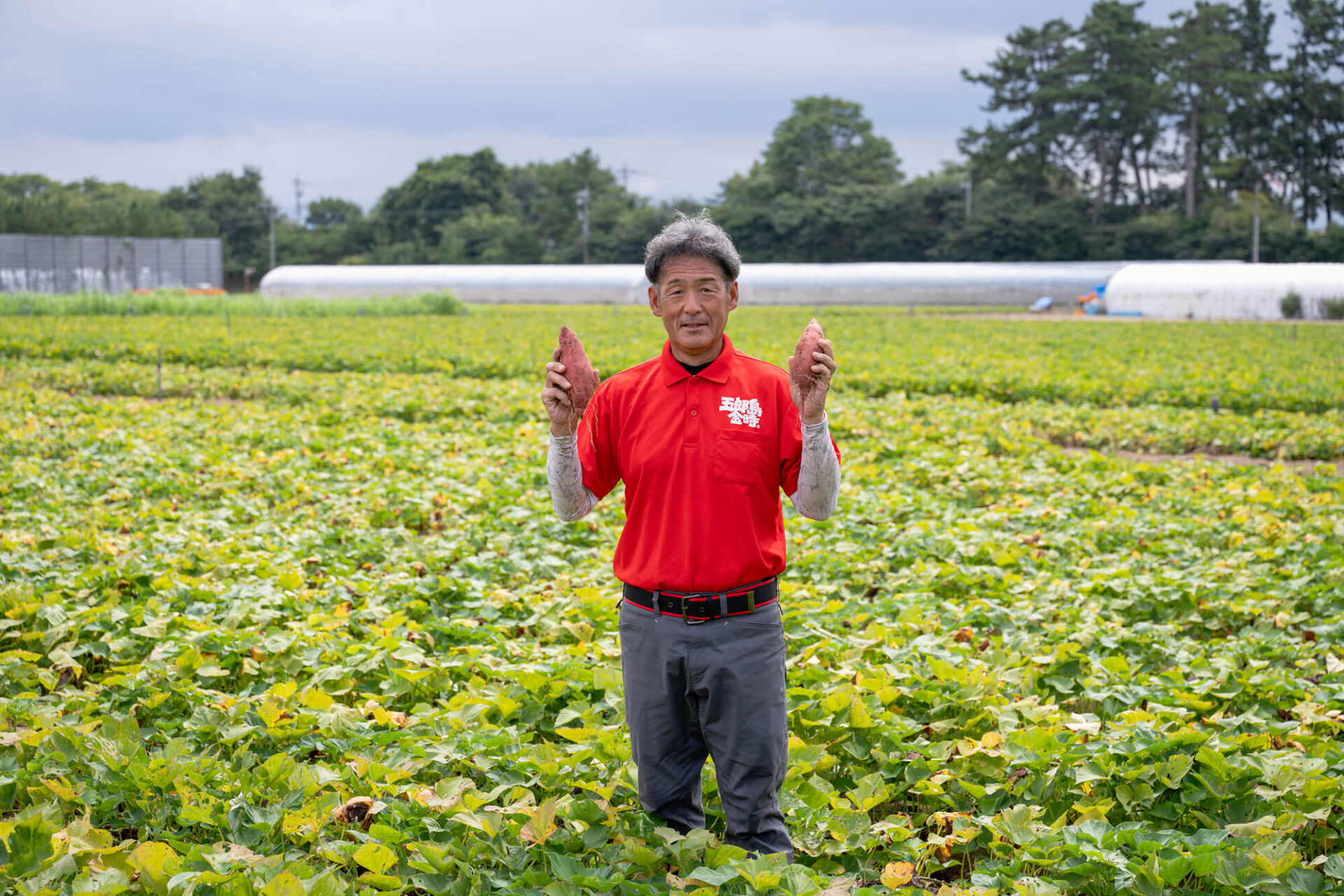
Specialized Fertilizer for Consistently High-Quality Crops
Sprouts are planted from late April through June, with fertilizer being added to the soil a week beforehand. One difficulty involved in growing Gorojima Kintoki sweet potatoes is that the effects of the fertilizer are extremely subtle and nuanced, making it hard to tell if it was added too early or too late.
In most regions of Japan, sweet potatoes are usually grown with the aim of having them be as large as possible, but the target for Gorojima Kintoki sweet potatoes is roughly 100–150 g: just right for eating one on your own. This size offers the perfect balance of convenience and flavor, so farmers make sure not to add too much fertilizer, to keep them from getting too big. Every field is unique — they each get different amounts of sun and wind, and the fertility of the soil varies — so farmers have to get creative and experiment with how they space out the plants, or how they fertilize the soil, to see what proves most effective.
Gorojima Kintoki are grown in sandy soil, which is not only unusual to begin with, but also means that farmers here don’t use ordinary fertilizers. Instead, they use a special fertilizer made primarily from rice bran, developed by the local producers’ association. Every year, they continue to run tests and subtly tweak the ingredients.
Once the sprouts are planted, no additional fertilizer is added; these sweet potatoes absorb nutrients so readily, more fertilizer would cause them to grow very rapidly and become misshapen. Using less fertilizer also leads to greater starch content, a desirable outcome.
These strict regulations, for everything from fertilizer ingredients to how it’s applied, help to ensure that the entire production region maintains a consistently high level of quality.
Sandy Soil Heats Up Easily, Making Water Management Even More Crucial
As summer arrives, Tadamura says, he’s worried about water management with the sprinklers. Most of the fields have sprinklers, so there’s no need to worry about those, but there are some areas that the piping doesn’t fully cover, creating issues when it comes to watering them. It’s also a windy area, so if the water doesn’t properly make its way to the plants, the sandy soil can heat up very rapidly, which in turn causes the sweet potatoes to become discolored. At the same time, lots of the farmers here apparently have that DIY spirit and maintain their own pipes, so they’ve largely been able to deal with the brutal heat of summers so far. Thanks to the determination of these farmers, the Gorojima Kintoki sweet potatoes crop has been reliably consistent from year to year.
Tadamura says that growing sweet potatoes in sandy soil can be tough, but it also has some major advantages. The fine sand helps keep their skin unharmed, and they grow in a low-stress environment, which helps give their flavor more depth and complexity.
The Three-Step Process of Harvesting Sweet Potatoes
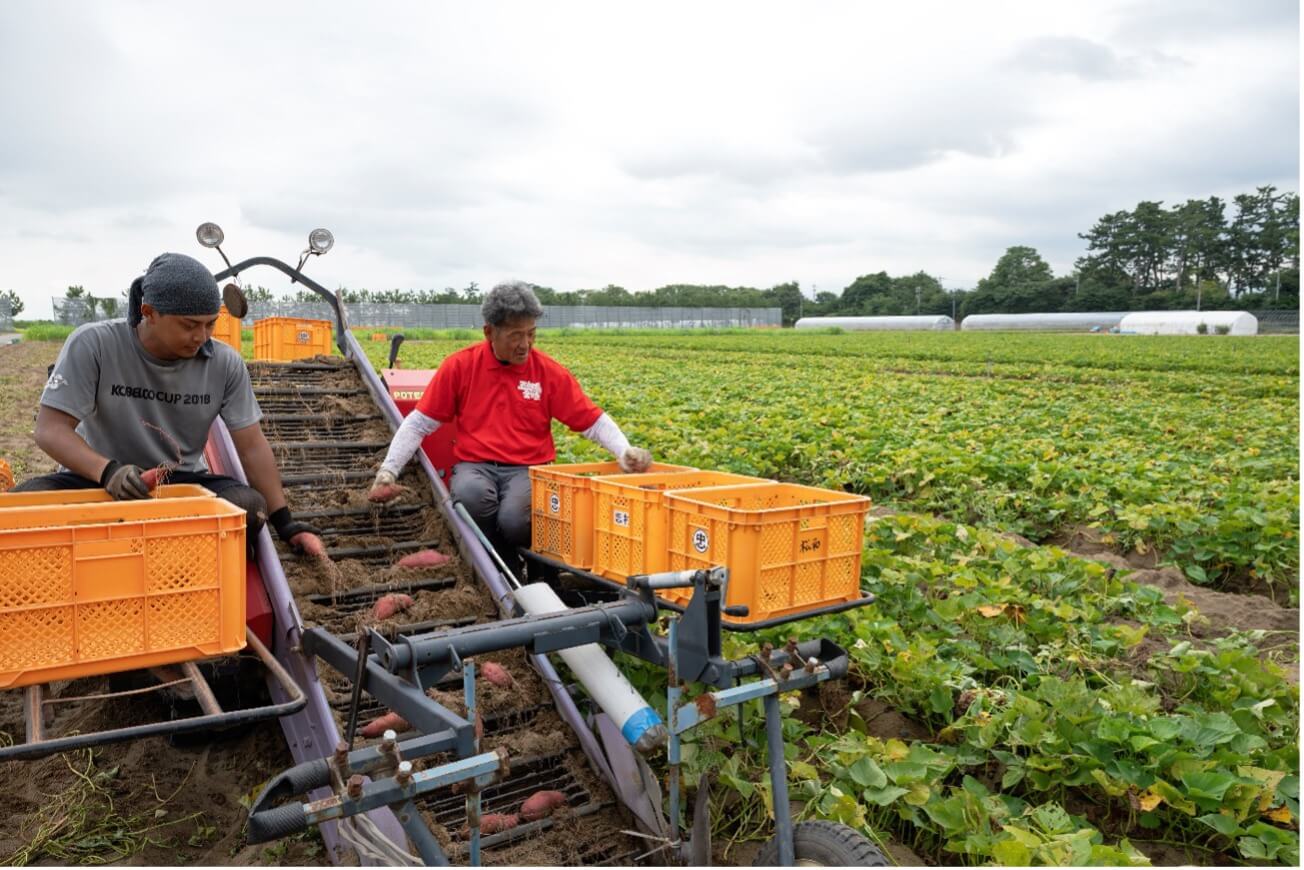
Gorojima Kintoki sweet potatoes have an early harvest season, starting around late August. There was once a time when they would be left in the ground until October, but as they’ve become more popular, the harvest has started earlier and earlier to meet market demand.
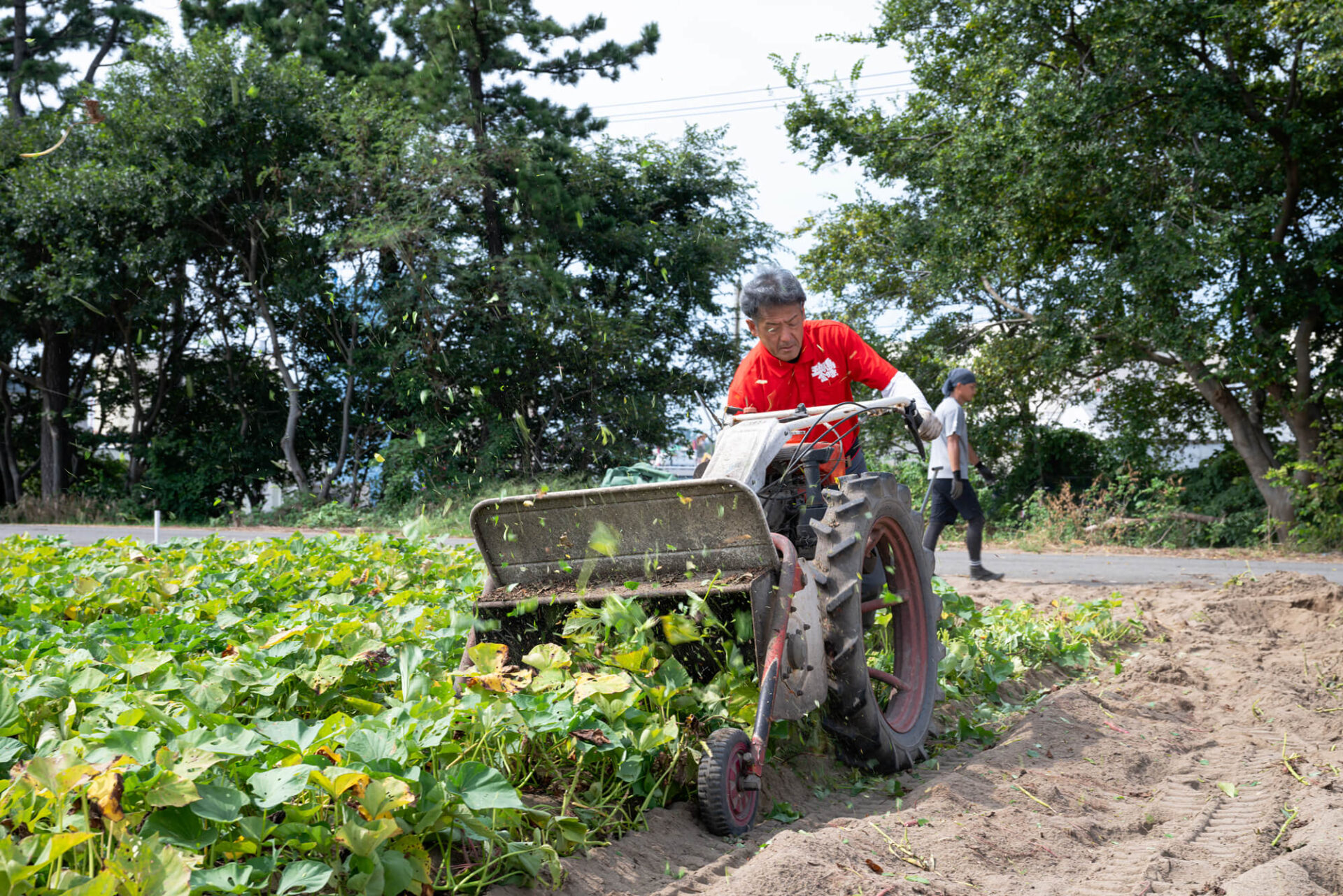
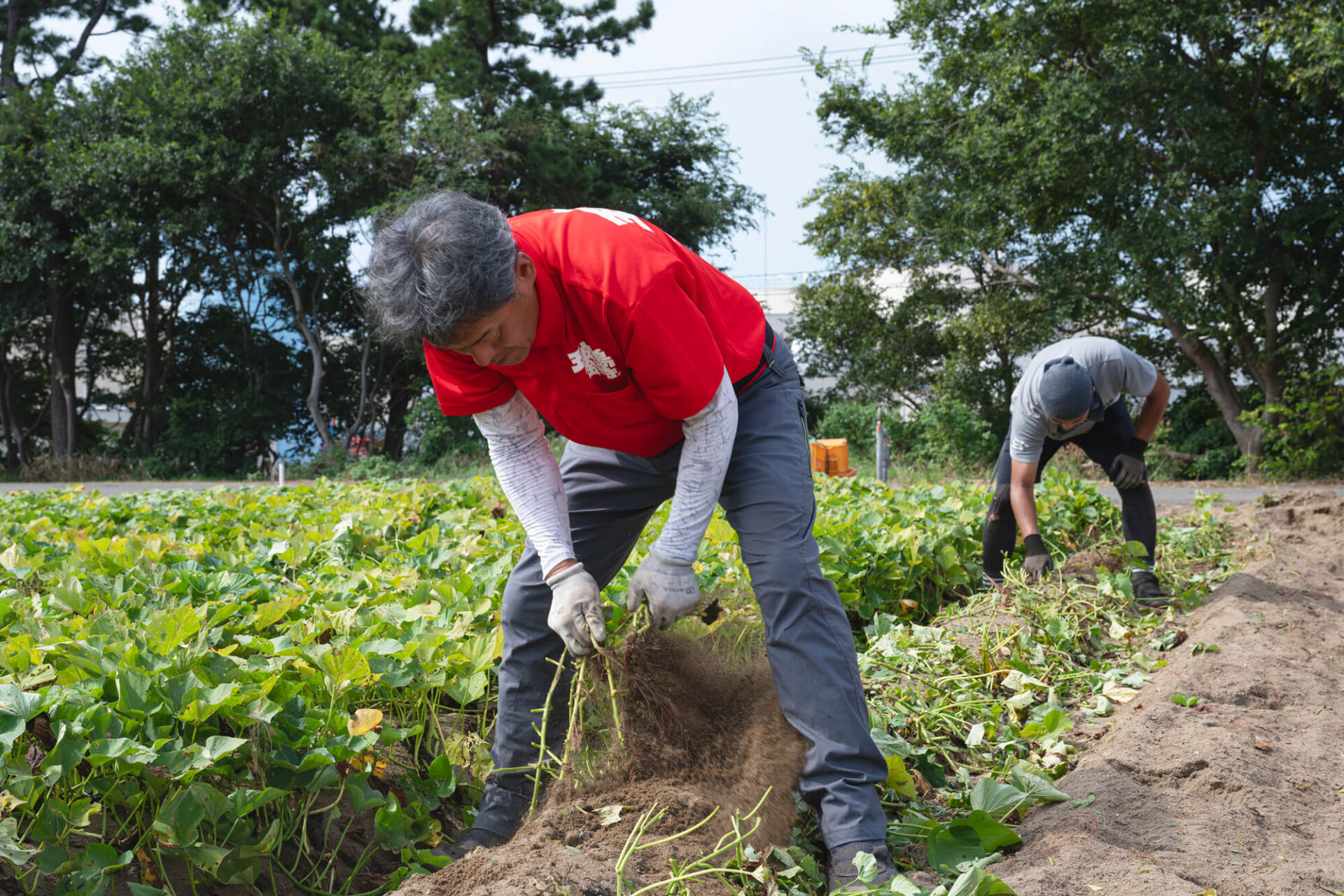
Digging up sweet potatoes, though, is much easier said than done, and the process involves three main steps. First, the stalks are cut away using a special machine. Next, the remaining stems are pulled out by hand, one by one. The stems that connect the sweet potatoes in the soil to the stalks above are incredibly tough, so farmers have to carefully remove them by hand to avoid damaging the sweet potatoes. Finally, the sweet potatoes themselves are dug up using a potato harvester. In late September, the farmers shift into high gear, spending all day long on harvesting sweet potatoes, which go into storage for the rest of the year to keep sellers stocked through the following June.
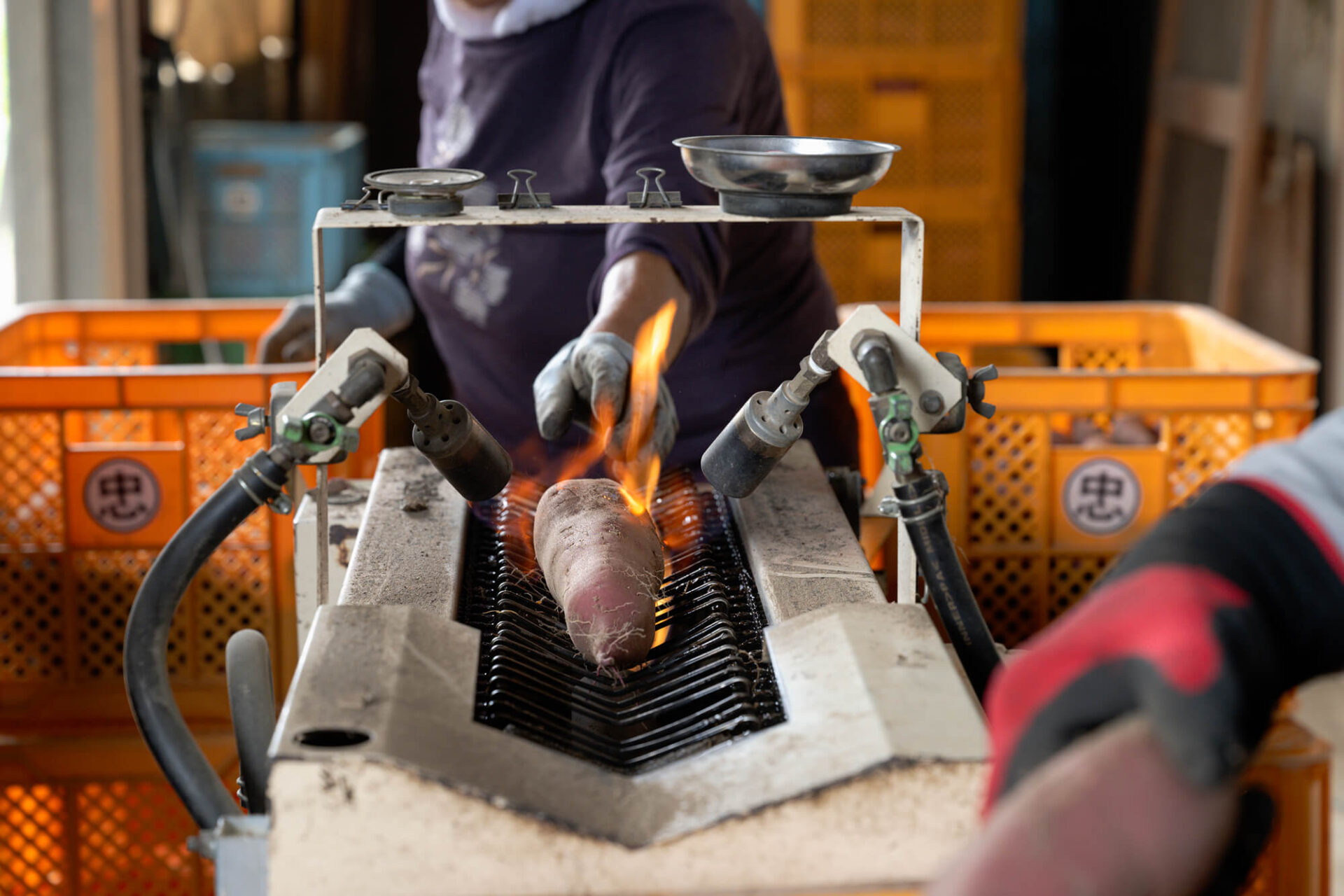
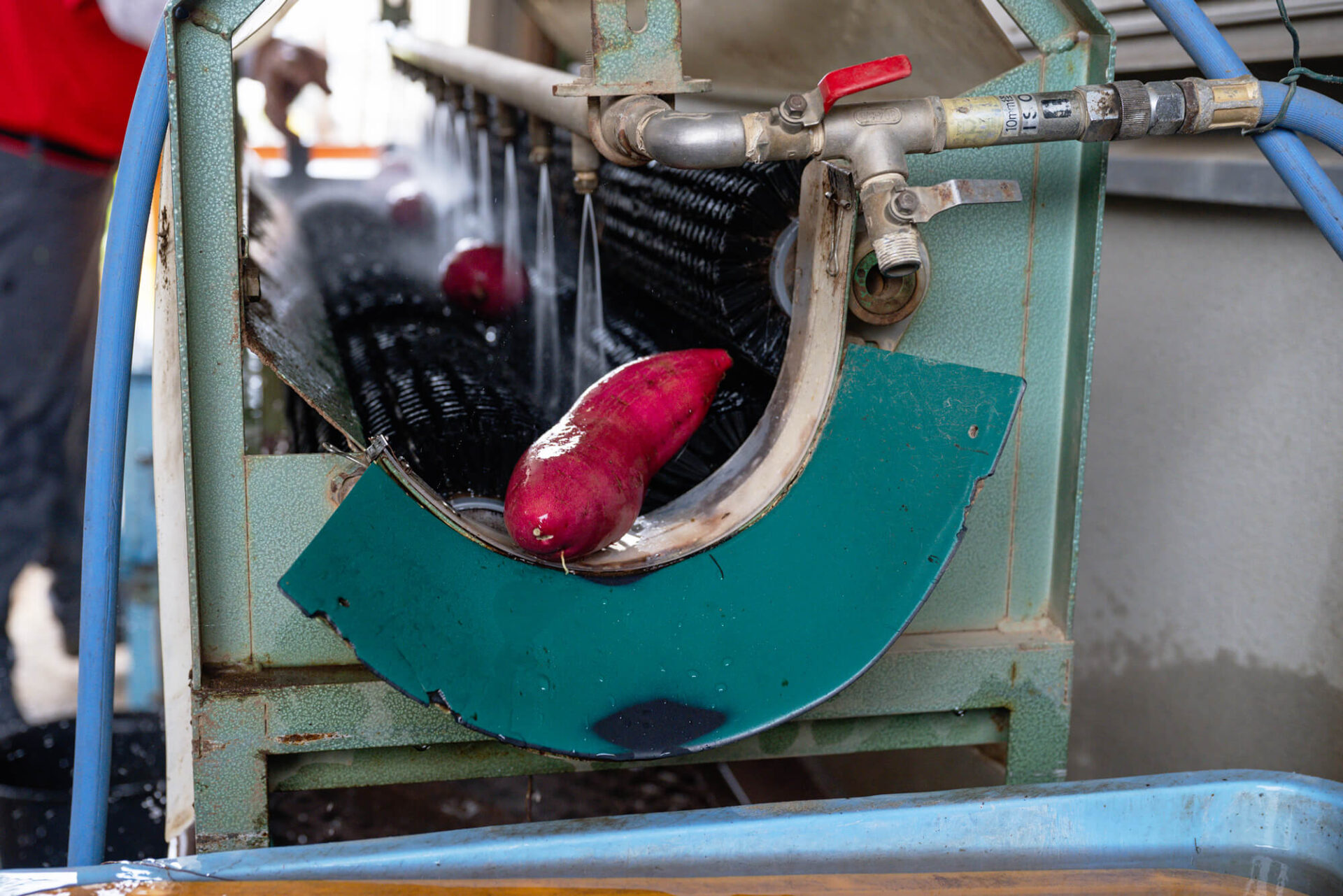
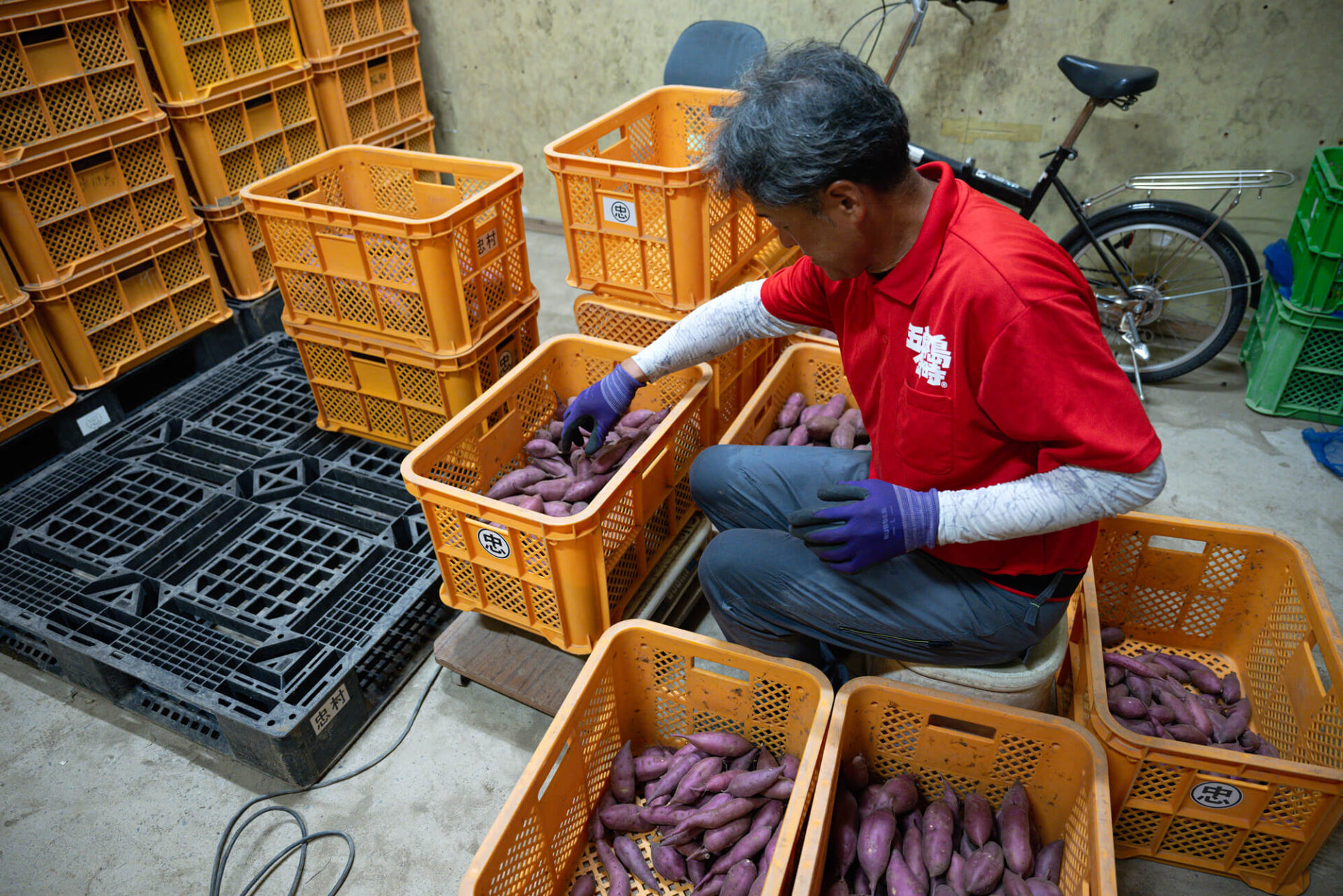
After the sweet potatoes are harvested and loaded into plastic crates, they are taken to be prepared for sale with specialized machinery: the “whiskers” (fine roots on their surface) are singed off, their surfaces are cleaned with a high-pressure water brush, and they’re sorted, boxed, and shipped.
Gorojima Kintoki sweet potatoes are also graded into one of seven quality rankings, in sizes running from 3XS to 2XL, for a total of thirty highly specific categories to better meet the increasingly fragmented needs of consumers. Most regions of Japan that grow sweet potatoes only sort them into ten categories at the very most. “We take pride in offering products that neatly fill in the gaps, whether it’s sweet potatoes meant for tempura, for giving as gifts, or whatever other purposes.”
Using One of Japan’s Leading Curing Storage Facilities to Sell Sweet Potatoes Nearly Year-Round
Sweet potatoes may be harvested in early autumn, but by taking advantage of curing storage facilities, they can be shipped out at full quality until the following June. An all-electric curing storage facility was built here back in 2005, and at the time, people called it the best in the country — so revolutionary, in fact, that people came from all around to see it for themselves. Even today, it remains a nationwide leader in terms of its functionality.
Storing sweet potatoes for 72 hours at 32–33°C, at near-100% humidity, causes four or five cork-like layers to form between the skin and the flesh. These layers help protect the sweet potatoes from germs that could otherwise enter through small scratches in their skin. This process also causes starch in the potatoes to convert into sugars, making them even sweeter and more delicious.
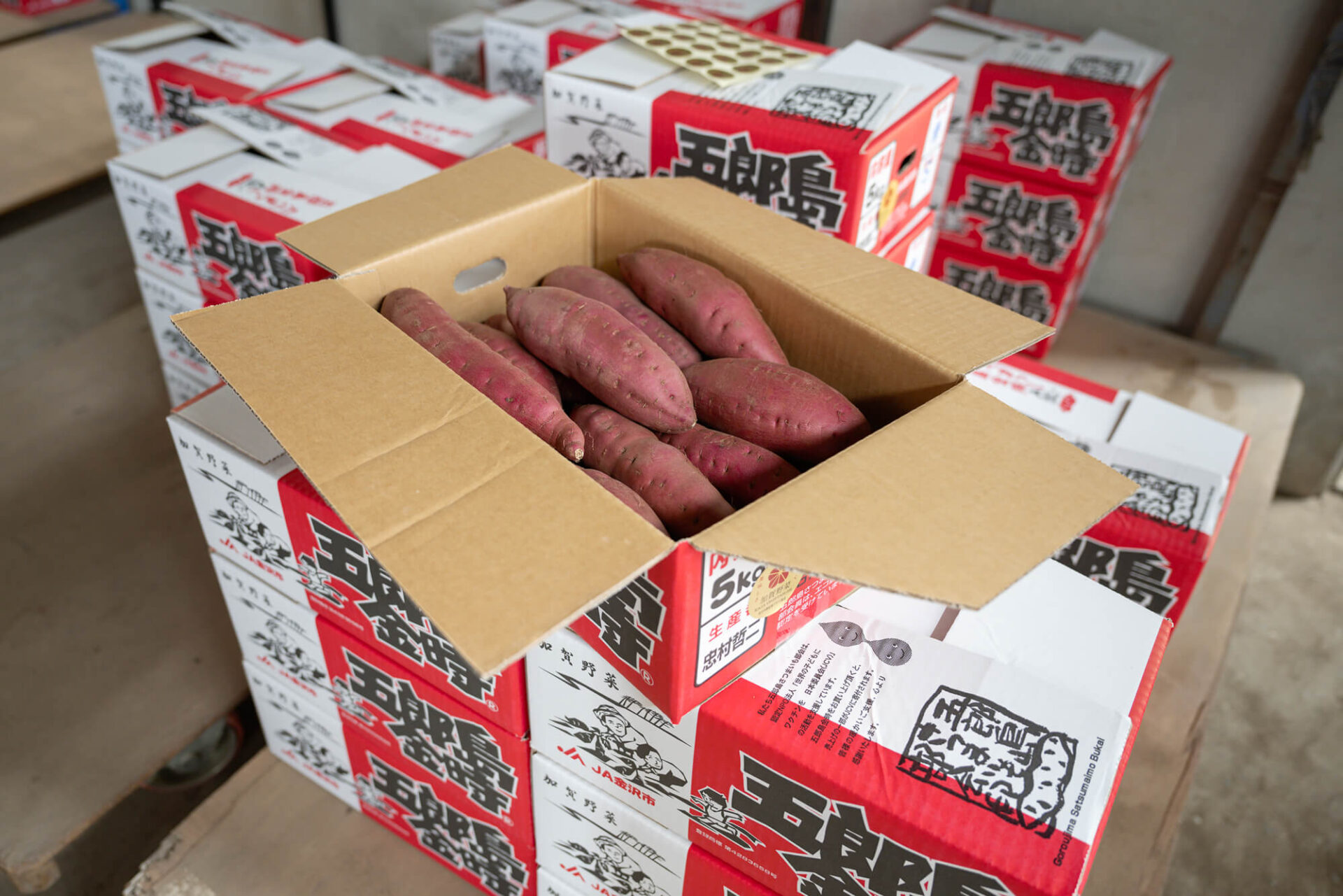
After 72 hours in the storage facility, Gorojima Kintoki sweet potatoes are allowed to cool slowly at room temperature for a day before being chilled. This helps to reduce the amount of stress they go through compared to the usual treatment for sweet potatoes, which is to simply put them directly into refrigeration after they are warmed. As a result, Gorojima Kintoki sweet potatoes keep longer than ones from other regions of Japan, and boast even better flavor.
Rich in Nutrients, and Delicious in Potato Salad or Cooked with Rice!
Gorojima Kintoki sweet potatoes contain all sorts of beneficial nutrients: vitamin B₁ helps relieve fatigue, vitamin C has promising antioxidant effects, beta-carotene can help boost the immune system, and dietary fiber promotes regularity.
Roast or steam them on their own, or cut them up and add them to your rice before cooking. Tadamura even recommends using them for (sweet) potato salad or croquettes.